Vacation Rentals
Top 7 Tips for Enforcing Extra Guest Fees
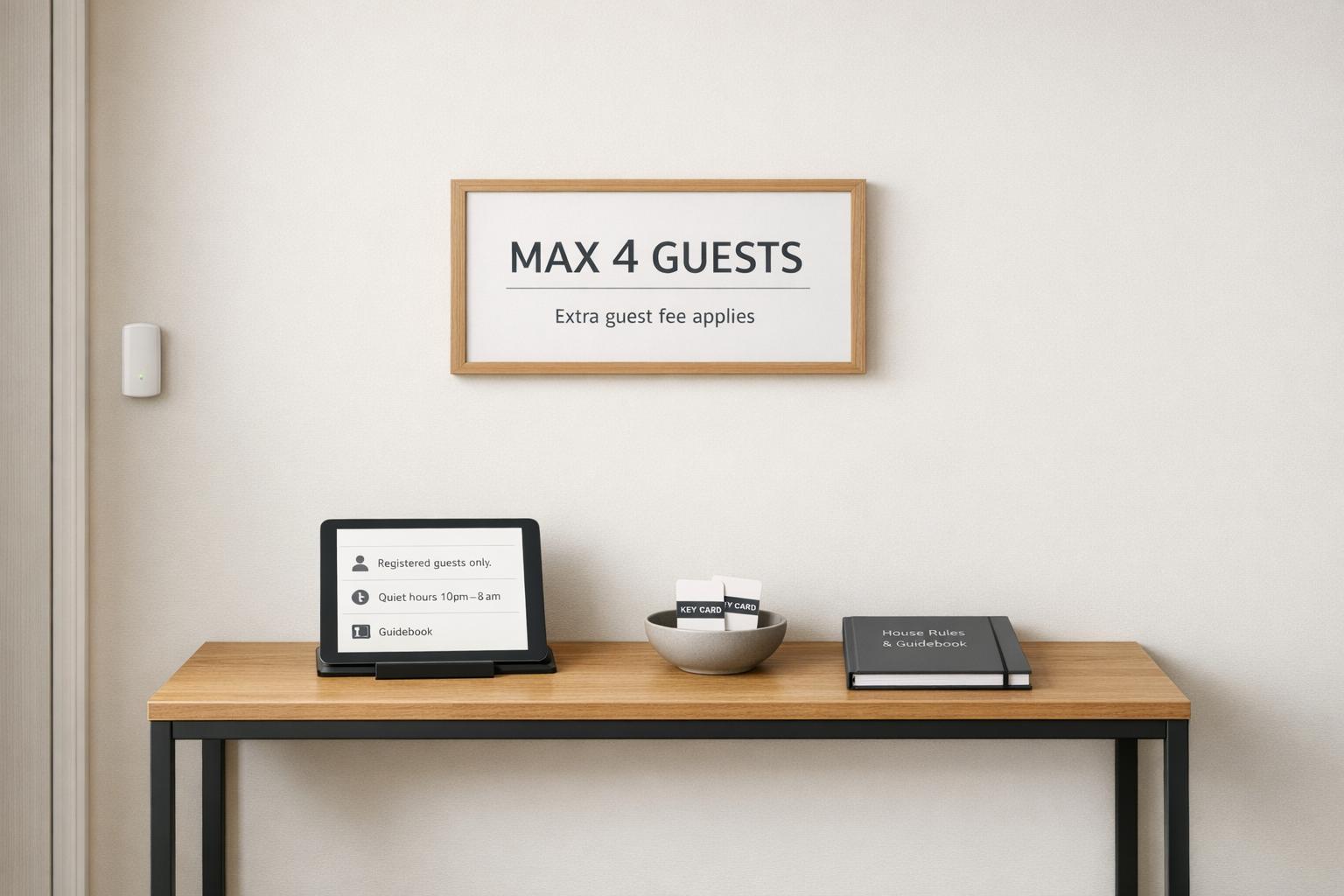
Top 7 Tips for Enforcing Extra Guest Fees
Want to manage extra guest fees without hassle? Here’s how.
Charging extra guest fees ensures fair compensation for increased utility use, cleaning, and wear on your property. It also helps you stay within legal occupancy limits. Follow these seven practical tips to enforce fees while maintaining a smooth guest experience:
- Clearly state occupancy limits and fees in your listing.
- Use a digital guidebook to reinforce rules after booking.
- Write specific, unambiguous house rules to avoid disputes.
- Communicate policies early and consistently.
- Verify guest counts before and during the stay using tools like smart locks or cameras (disclosed as required).
- Handle extra guest situations calmly and professionally.
- Use guest feedback and data to refine your fee policy.
Bottom line: Clear policies and consistent communication help protect your property, revenue, and peace of mind.
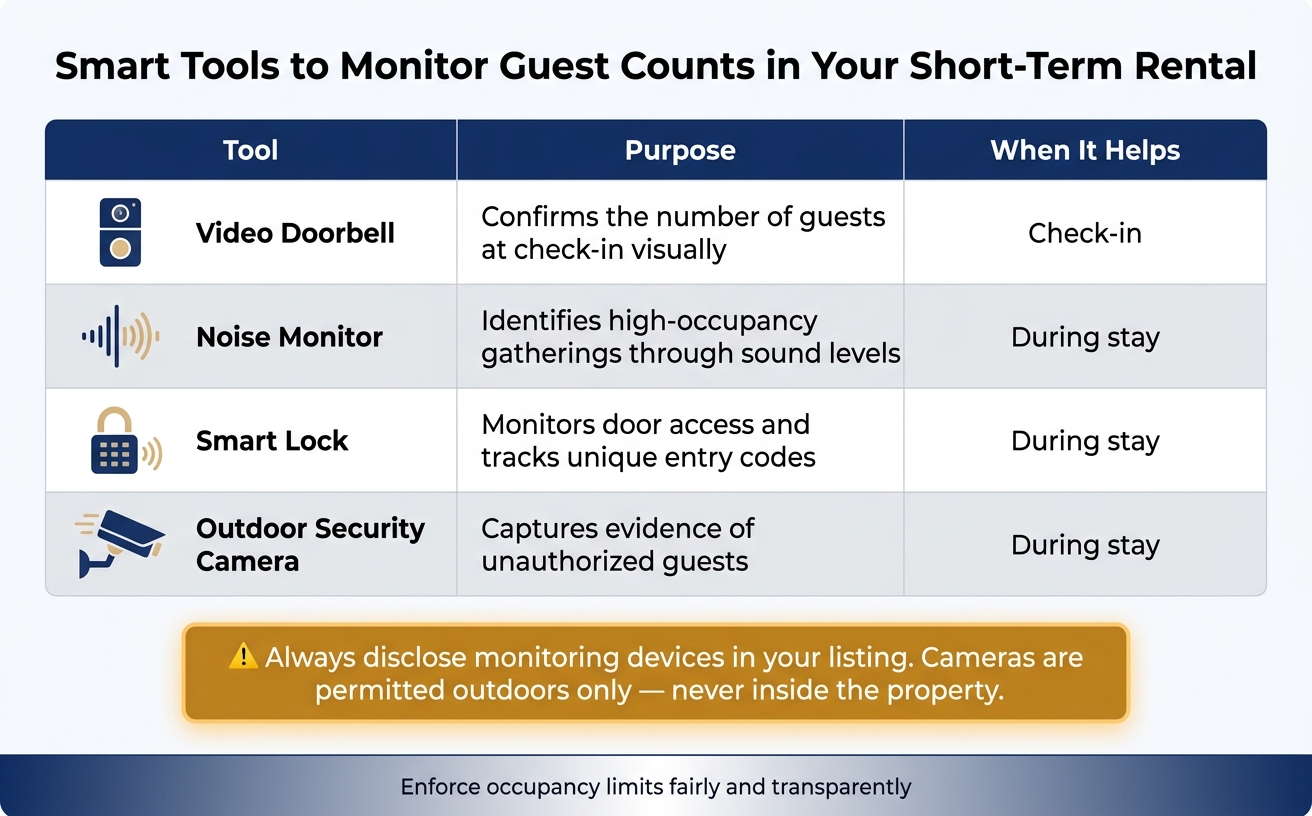
Smart Tools to Monitor Guest Counts in Your Short-Term Rental
Here's when you SHOULD charge an Airbnb guest extra
sbb-itb-ec91689
1. State Occupancy Limits and Extra Fees Clearly in Your Listing
The first step to managing extra guests is being upfront about fees and occupancy limits. Your listing description is where guests go for details before booking, so clarity here is key. If these details are vague, it can lead to misunderstandings and disputes. Being specific helps set expectations from the start.
For example, instead of using unclear phrases, try something like: "Base rate covers up to 4 guests. Each additional guest is $25 per night." This eliminates any guesswork for potential renters.
Typically, extra guest fees range from $20 to $25 per person, per night. However, in premium markets, these fees can go as high as $35 per person.
Make sure this information is easy to find. Place it prominently at the top of your description rather than burying it in fine print. As Airbnb host Linda108 wisely shared:
"I have found that difficult guests can often help me tweak my listing to be more clear because they come with a perspective I don't have."
To reinforce these terms, include them in your House Rules section as well. When guests book, they agree to these rules, giving your occupancy limits a contractual weight. iGMS emphasizes this point:
"Your house rules are your first line of defense against potential disputes between you and your guests."
Finally, clarify whether daytime visitors who don’t stay overnight are allowed. Without a stated policy, guests might assume visitors are acceptable, leading to potential issues.
2. Use a Digital Guidebook Platform Like Howard
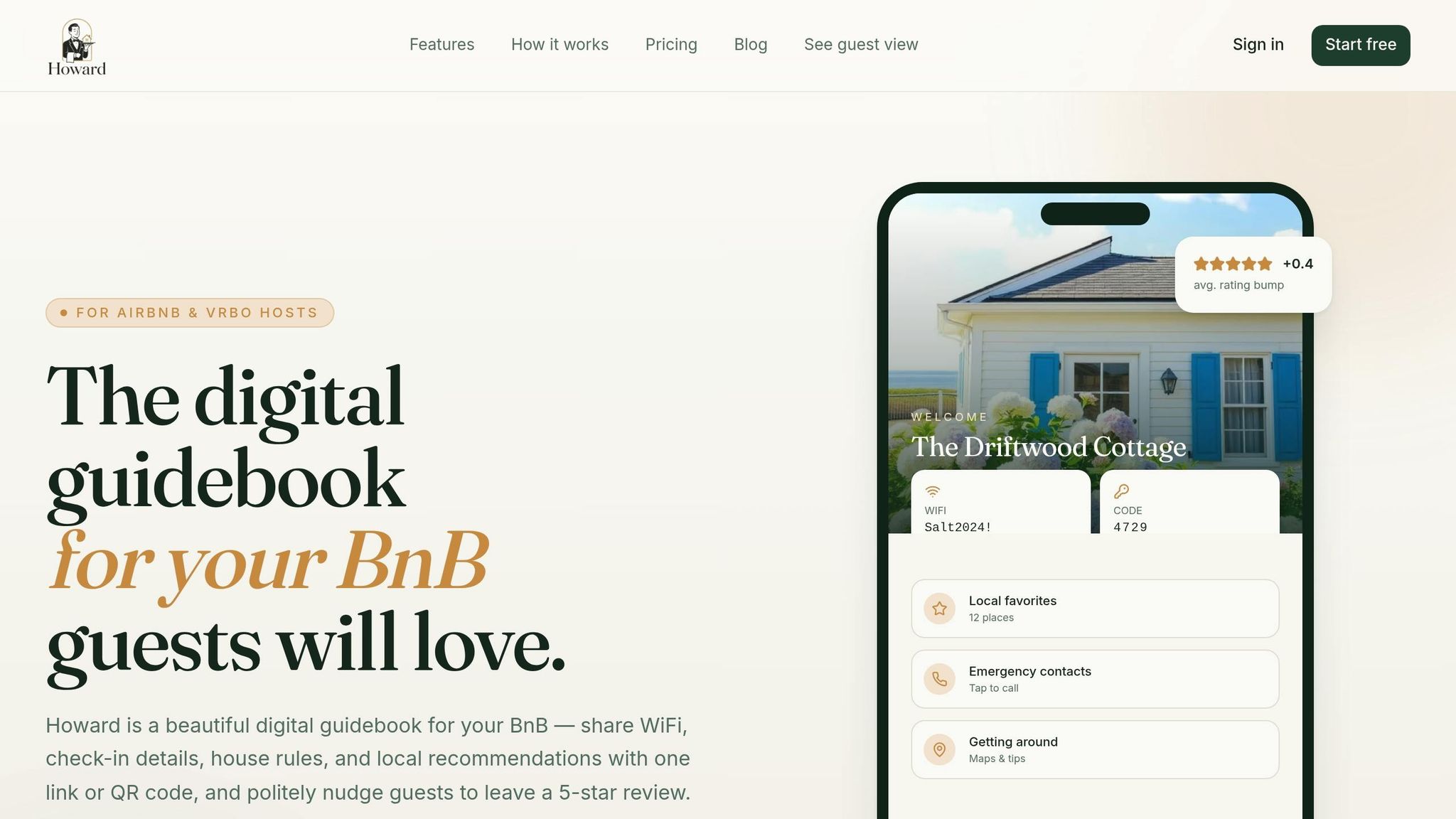
Even though your listing clearly states occupancy limits, guests often forget these details after booking. Once a reservation is confirmed, many overlook the fine print. This is where a digital guidebook platform like Howard becomes incredibly useful.
Howard allows you to create a shareable link or QR code that centralizes essential details like occupancy limits, fee structures, and visitor guidelines. By making this information easily accessible, your guests are more likely to understand and follow your rules - much better than relying on them to dig through a listing description.
You can also customize the guidebook for specific situations, keeping communication clear and relevant while minimizing confusion.
Howard’s AI-powered messaging takes it a step further by automating the communication process. It sends reminders about occupancy policies and fees immediately after booking and again before check-in. As Hospitable highlights:
"Good communication is a vital aspect of managing your short-term rental business... software... can help automate your day-to-day operations, including communication with guests."
Additionally, a timestamped digital guidebook serves as a verifiable record of your policies. This can help resolve disputes over fees or rules that guests might claim they weren’t aware of.
3. Write Specific, Unambiguous House Rules
When house rules are too vague, they leave room for disputes. For example, saying "no extra guests" without explaining what that means or outlining the consequences can lead to misunderstandings. Guests might interpret such rules to suit themselves. Using clear, specific language ensures there’s no room for misinterpretation.
For instance, explicitly state the maximum occupancy: "This property accommodates up to 6 guests, including daytime visitors." Define an unregistered guest as anyone not included in the original booking, even if they’re just stopping by briefly. This level of detail sets a solid foundation for enforcing your policies.
Instead of vague phrases like "additional charges may apply", be precise. For example: "Each unauthorized guest will incur a fee of $100 per person, per violation." Airbnb host Cherie71 takes this approach with her rules:
"Guests, not listed on the reservation, are not allowed on/in property for any reason. Not even for a minute or a quick peek and will result in a fee of $100.00 per non-registered guest per violation."
Make sure to clearly outline all consequences. For example, include a statement such as: "Violations may result in immediate termination of your stay without a refund." Evelyn Badia, Founder of The Hosting Journey, emphasizes the importance of clarity:
"A guest has to know what is allowed in our homes, from smoking to the number of people allowed in my home at any given time. In addition, Airbnb will not support a claim without very clearly written, specific rules."
While clarity is key, the tone of your rules also matters. Rules that sound overly strict or legalistic can make guests feel unwelcome. Alex Concepcion, a consultant at Spire Vacation Rental Consulting, suggests aiming for a tone that’s "70% warm and inviting, and 30% firm". Striking this balance helps ensure your rules are respected without alienating your guests.
4. Share Your Policies Early and Repeat Them Consistently
Setting clear house rules is just the first step; enforcing them early ensures guests fully understand occupancy limits and any related fees. The timing of your communication is just as important as the rules themselves. If guests only learn about extra guest fees when they arrive, you’ve already lost the chance to address potential misunderstandings.
Right after a booking is confirmed, send a message to verify the guest count and reiterate your policy. Then, follow up a few days before check-in with a final reminder in your instructions. For example: "This property accommodates up to 6 registered guests; additional guests incur a fee of $50 per person, per night." Many travelers may not realize that the rate covers only a specific number of guests, so this proactive approach helps avoid any last-minute confusion.
This multi-step communication strategy does more than just inform - it creates a documented trail. Should you need to file a resolution request with platforms like Airbnb or Vrbo, consistent written communication at multiple points strengthens your case. In this way, consistency becomes both a tool for clear communication and a safeguard for your property.
Up next: how to verify guest counts and handle extra charges during their stay.
5. Confirm Guest Counts Before and During the Stay
Once you've set clear policies and communicated them early, the next step is to ensure compliance by confirming guest counts at critical points. This isn't just about rules - it's about safeguarding your revenue and maintaining control over your property.
Start by requesting an exact headcount at the time of booking. Use a tiered occupancy system that requires guests to disclose any additional people, including day visitors who won't be staying overnight.
During the stay, you can verify occupancy using smart devices like noise monitors, video doorbells, and smart locks. Here's a breakdown of how these tools can help:
| Tool | Purpose | When It Helps |
|---|---|---|
| Video Doorbell | Confirms the number of guests at check-in visually | Check-in |
| Noise Monitor | Identifies high-occupancy gatherings through sound levels | During stay |
| Smart Lock | Monitors door access and tracks unique entry codes | During stay |
| Outdoor Security Camera | Captures evidence of unauthorized guests | During stay |
It's essential to disclose any monitoring devices in your listing description and house rules. Cameras are only allowed outdoors - never inside the property. This transparency isn't just a platform requirement; it also discourages unauthorized guests while protecting your liability.
"Knowing the identity of guests entering the property is extremely important for the protection and liability of the host." - Host Tools
6. Address Extra Guests Calmly and Professionally
When monitoring tools alert you to extra guests, it’s important to handle the situation calmly and professionally. Start by confirming the details before reaching out to the guest. This step ensures accuracy and maintains trust while reinforcing the policies you’ve already communicated.
Use any evidence you’ve gathered, like footage or noise data, to verify the issue. Then, contact the guest through the booking platform’s messaging system with a neutral and factual tone.
"Just ask for the extra guest charges politely and neutrally." - Paul154, Level 10 Contributor, Airbnb Community
"No need to make any accusation just state facts." - KKC, Airbnb Host Forum
Once the situation is clarified, refer to the specific house rule that applies. Submit a trip change request or use the Resolution Center to adjust the rate. Keeping the transaction official through the platform avoids the discomfort of requesting cash directly. Be sure to set a clear deadline - just a few hours during the stay - for fee payment to prevent complications.
If the guest resists or refuses to pay, escalate the issue to the platform’s support team right away. Let them know you have documented evidence and are enforcing a posted rule. It’s best to address extra guest fees while the guest is still staying at your property, as your options to resolve the matter become more limited after checkout.
7. Use Guest Feedback and Booking Data to Improve Your Fee Policy
Once you've addressed how to handle extra guest fees during a stay, it's time to refine your policies by tapping into guest feedback and booking data. Guest insights can highlight areas where your fee policy might need better explanation. For instance, if you notice guests frequently asking, "Why am I being charged extra if I'm already a guest?" it might be worth repositioning your extra guest policy higher in your property description. Making it more visible before guests book can help avoid confusion and improve transparency.
Building on your communication strategies, dive into your past booking data to uncover patterns in resource usage. Tracking changes in water and electricity consumption, supply use, and cleaning times can help you justify your fee. This data also allows you to set a rate that accurately reflects your actual hosting costs.
Take a closer look at your additional expenses. As Hospitable advises:
"Figure out your additional expenses for hosting more guests - tracking the increased use of utilities, and basic supplies can help you set a fee that's fair to you and your guests."
It’s also smart to review what similar listings in your area are doing. If most of your local competitors aren’t charging extra guest fees, a high per-person fee could hurt your search ranking and booking rate. On the flip side, undercharging compared to market norms might mean you're leaving money on the table. Striking the right balance involves aligning your fees with both your operational costs and local market standards. Don’t forget to factor in seasonal trends - larger groups often book more during the summer or around local events, which may justify adjustments to your pricing.
Wrapping It Up
Handling extra guest fees doesn’t have to be a headache. With clear policies, early communication, and consistent enforcement, most guests will respect your rules - no awkward confrontations necessary.
The key takeaway? Extra guest fees help you protect your income while keeping base rates attractive for smaller groups. These fees ensure that larger groups cover the additional costs for utilities, cleaning, and wear and tear, rather than smaller groups footing the bill. Plus, they help reduce liability risks. Unregistered guests can lead to complications, and violations of Airbnb's global party ban could even result in account suspension.
Using tools like a digital guidebook - such as Howard - can make a big difference. By centralizing your occupancy rules and fee details, you reinforce your policies throughout the guest’s stay, protecting your property while keeping guests informed and satisfied.
As Host Tools wisely notes:
"The first line of defense in protecting yourself from unregistered guests is to state your guest policy in your house rules clearly."
With clear rules and the right tools, disputes become rare, and your hosting experience stays smooth.
FAQs
How do I charge for day visitors?
To implement a fee for day visitors, start by establishing a clear policy that applies to all guests, including those not staying overnight. Make sure this policy is communicated upfront - whether through your website, booking platforms, or during the reservation process. Set a specific fee for each additional visitor to maintain transparency. This approach helps safeguard your property and discourages unregistered guests from entering without payment, ensuring fairness and consistency in managing extra guest fees.
What proof do I need to enforce extra guest fees?
To apply extra guest fees, you’ll need solid proof that more guests stayed than initially agreed upon. Documentation like a trip change request or the original reservation details can serve as confirmation of the expected guest count. If there are unregistered guests, records like check-in photos or communication logs can support your claim. It’s also important to clearly outline your extra guest fee policy from the start, so guests are aware of and agree to the terms upfront.
How can I avoid bad reviews when enforcing fees?
Clear and upfront communication is key when it comes to enforcing extra guest fees. Make sure your policies are easy to understand and explain the reasoning behind the charges, such as covering additional wear and tear or higher utility expenses. Guests are more likely to accept these fees if they know about them before their stay.
To keep things running smoothly, consider using automated systems to monitor guest compliance. This allows you to quickly address any issues while maintaining a friendly and professional tone. Positive interactions and transparency go a long way in building trust and avoiding misunderstandings that could lead to negative reviews.