Vacation Rentals
Luxury vs. Practicality: What Guests Value More
Luxury vs. Practicality: What Guests Value More
When booking vacation rentals, guests prioritize two things: practicality and luxury. Practicality includes basics like reliable Wi-Fi, cleanliness, and self-check-in, while luxury adds features like hot tubs or spa-like bathrooms. However, luxury only works when the basics are flawless - a broken AC or poor communication can ruin even the most luxurious stay.
Key takeaways:
- Practicality matters most: Fast Wi-Fi, clean spaces, and accurate listings are non-negotiable.
- Luxury enhances, not replaces: Features like hot tubs or premium bedding boost appeal but only after the basics are solid.
- Guests' needs vary: Business travelers want workspaces, families need full kitchens, and couples value privacy.
- U.S.-specific demands: Air conditioning, parking, and pet-friendly options are often expected.
The balance between functionality and standout features is the key to better reviews and higher bookings. Start by perfecting the basics, then add targeted upgrades like fire pits or smart home gadgets.
Stop Calling It Luxury: Setting the Standard in Vacation Rentals with Nir Maimon
sbb-itb-ec91689
How Guests Set Priorities Before Booking
Before hitting "Reserve", guests have already weighed a property against a set of must-haves. Research shows that 97% of travelers see amenities as a key factor when deciding where to stay. These considerations often fall into two categories: basic necessities and personalized extras.
What Guests Expect as a Baseline
When it comes to the basics, guests have certain non-negotiables. These aren't features that make a property stand out - they're the bare minimum. As highlighted in the Jurny 2026 Guest Expectations Report:
"A modest property that is immaculate and accurately represented regularly achieves 5‑star ratings."
Cleanliness is at the top of this list. A single mention of "dirty" in a recent review can do more damage to a listing's reputation than a dozen glowing five-star reviews can repair. Accurate photos and honest descriptions also play a huge role in building trust, helping reduce the perceived risk of booking.
How Trip Purpose and Budget Shape Preferences
Once the essentials are covered, a guest’s trip purpose and budget take center stage in shaping their priorities. For example:
- A remote worker staying in Asheville, NC, might value a dedicated workspace and fast internet (at least 25 Mbps upload speeds) over luxury features like a hot tub.
- A family renting a beach house in the Outer Banks will likely focus on practical amenities like a full kitchen, a washer/dryer, and childproofing.
- A couple celebrating an anniversary might seek an intimate vibe, with perks such as a fireplace, a balcony with a view, or a private hot tub.
Even when guests are looking for high-end experiences, they still expect the basics to be reliable. Interestingly, budget-conscious travelers and premium guests share one critical perspective: quality essentials outweigh flashy extras. The Hilton 2026 Trends Report captures this shift:
"Travelers prioritize emotional motivations - the desire to rest, the urge to reconnect, and a longing for experiences that feel meaningful. The question isn't where to go, but why."
This growing trend, often called the "whycation" mindset, highlights how guests are booking based on the emotions a property evokes. Features like premium mattresses and blackout curtains, which contribute to rest and relaxation, can be more appealing than a large flat-screen TV.
U.S.-Specific Guest Expectations
In the U.S., certain practicalities and preferences vary by region and lifestyle. For instance:
- Air conditioning is a must in hot climates, like Scottsdale, AZ, or cities such as Nashville, TN.
- Free on-premise parking is considered standard in many areas, not an extra perk.
- Safety features are a top concern, especially for solo travelers. Reliable 24-hour support or an emergency contact option is seen as the most important safety measure for high-quality stays. In fact, 36% of solo travelers rank safety as their number one priority.
Pet-friendliness is another major factor in the U.S. With 68% of households owning a pet and 37% of those pet owners traveling with their animals, offering a pet-friendly policy can be a game-changer. It's a relatively small investment that can provide a competitive edge in attracting a broader range of guests.
These practical considerations create the groundwork for a property to succeed. Once these essentials are in place, hosts can layer in standout luxury features to elevate the guest experience further.
Practical Amenities Guests Expect in Every Rental
When guests choose a vacation rental, their focus quickly shifts to whether the property meets their basic needs. By 2026, expectations have skyrocketed, with travelers comparing rentals to boutique hotels. Any slip in comfort, connectivity, or communication can make or break a stay. These rising standards highlight the importance of practical features that are no longer optional.
The Core Practical Features
While they may not be flashy, practical amenities are the backbone of a great rental experience. Without them, even the most luxurious property can fall short. High-speed Wi-Fi is now considered essential - on par with running water, according to Jurny's 2026 Guest Expectations Report:
"High-speed WiFi (guests now consider it as essential as running water)"
But connectivity is just the beginning. Guests expect a kitchen equipped with quality cookware, basic pantry staples, and coffee or tea. Bedrooms should offer blackout curtains, conveniently placed outlets, and high-quality linens. Laundry facilities, complete with detergent, are no longer a perk - they're a standard. And reliable heating and air conditioning are non-negotiable; a malfunctioning HVAC system is one of the quickest ways to earn a bad review.
Here’s a quick summary of the must-have amenities in 2026:
| Category | Must-Have Amenities |
|---|---|
| Connectivity | High-speed Wi-Fi with full property coverage |
| Access | Smart locks or keyless entry |
| Climate | Reliable heating and air conditioning |
| Kitchen | Quality cookware, basic pantry staples, coffee/tea |
| Bedroom | Blackout curtains, accessible outlets, quality linens |
| Laundry | Washer and dryer with detergent included |
| Safety | Smoke detectors, emergency contacts, house rules |
Safety and Clear Communication
The practical side of hosting extends beyond physical amenities. Guests need to feel safe and well-informed from the moment they arrive. This means having functional smoke detectors, clearly visible emergency contact information, and house rules that are easy to locate. These details should never be hidden in a pre-arrival email that guests might overlook.
Simple missteps - like incorrect door codes, unclear parking directions, or missing Wi-Fi passwords - can frustrate guests and sour their entire experience. As LiveSuites explains:
"Guests are far less forgiving of surprises than they are of simplicity. A modest property that delivers exactly what it promises will outperform a 'luxury' listing that overpromises and underdelivers."
Providing clear and straightforward instructions builds trust and ensures a smoother stay.
How Digital Tools Reduce Guest Friction
Digital tools have become a game-changer for streamlining guest experiences. Instead of hunting through multiple emails or messages, guests should have instant access to all the information they need - making their stay safer and more convenient.
Platforms like Howard simplify this process. Howard allows hosts to create a shareable link or QR code that consolidates key details like Wi-Fi credentials, parking maps, check-in instructions, emergency contacts, and house rules. Properties using tools like this report 20% fewer service issues and guest complaints. By reducing questions and frustrations, hosts can deliver smoother stays and earn better reviews.
Luxury Features That Make a Stay Memorable
Once the basics are covered, adding the right luxury features can turn a stay into something truly unforgettable. The trick is to focus on upgrades that genuinely enhance the guest experience rather than those that are purely decorative.
High-Impact Luxury Additions
Certain upgrades can significantly increase both nightly rates and bookings. One standout example is hot tubs. Research shows they can lead to a 14.3% increase in Average Daily Rate (ADR). In one case from Gatlinburg, a US$5,000 investment in a hot tub raised annual earnings from US$20,702 to an impressive US$45,745, paying for itself in less than three months.
Outdoor amenities also deliver strong returns. Fire pits, which cost between US$300 and US$2,000 to install, often recoup their cost within one to four months. Pools add a 9.5% premium to ADR, while saunas contribute about 7.4%. Inside the property, spa-like bathrooms with features such as rainfall showerheads, freestanding soaking tubs, and heated floors immediately signal a high level of quality. As Elliott Caldwell, Co-Founder & CEO of Home Team Luxury Rentals, explains:
"Luxury is not created by adding more features - it's created by how well those features work together."
These impactful upgrades create a strong foundation for smaller, complementary touches that further elevate the guest experience.
Small Touches That Feel Luxurious
Beyond large-scale upgrades, small details can make a big impression. Sleep quality is one of the most critical factors. For instance, a drop in rating from 4.9 stars to 4.7 stars - often due to subpar bedding - can result in a 22% decline in total revenue. A thoughtfully designed "hushpitality" package, including blackout curtains, a white noise machine, and a quality mattress topper, can cost between US$200 and US$1,000 for an entire property and help maintain those all-important ratings.
Simple gestures also go a long way. A welcome basket filled with locally sourced treats, a handwritten note, or a curated list of neighborhood highlights - like a hidden hiking trail, a cozy coffee shop, or a family-owned restaurant - shows thoughtfulness and care. These small touches often receive "disproportionate review credit", meaning guests are far more likely to mention them in reviews than their cost would suggest.
Using Howard to Deliver a Personal Touch
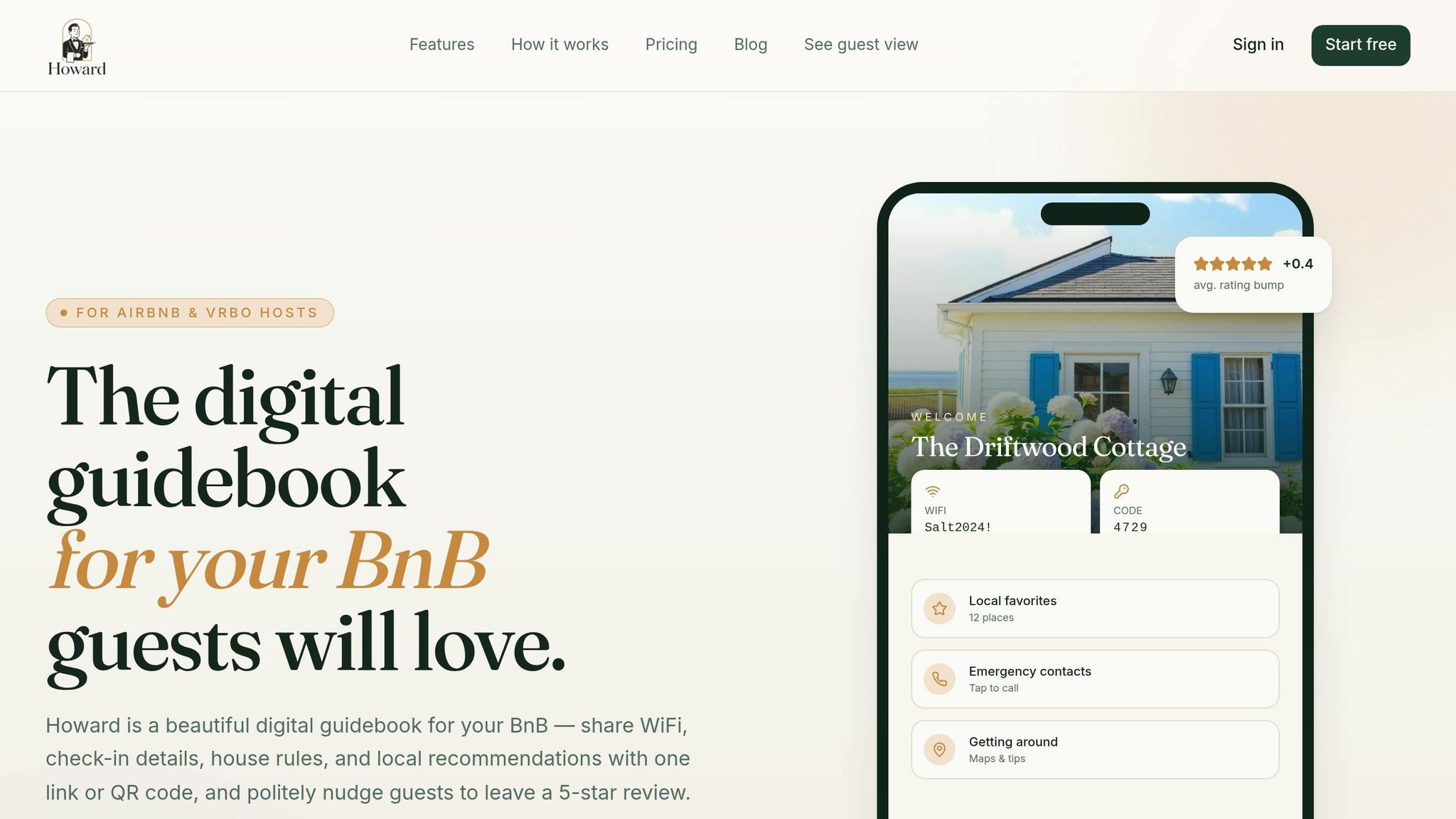
Personalization doesn’t stop at physical upgrades. Tools like Howard bring a digital layer of luxury to the guest experience. This platform allows hosts to create a shareable digital guidebook, accessible via a QR code or link. Unlike generic tourist brochures, Howard lets hosts include tailored recommendations - specific restaurants, activities, and local gems - that align with the property’s location.
This digital guidebook can be updated seasonally and customized for different guest types, such as families, couples, or remote workers. It also provides property-specific tips, helping guests navigate their stay with ease. By offering this level of personalization, hosts can turn a rental into a memorable experience that guests are excited to rave about - and revisit.
Luxury vs. Practicality: A Side-by-Side Look
Luxury vs. Practicality: What Vacation Rental Guests Value Most
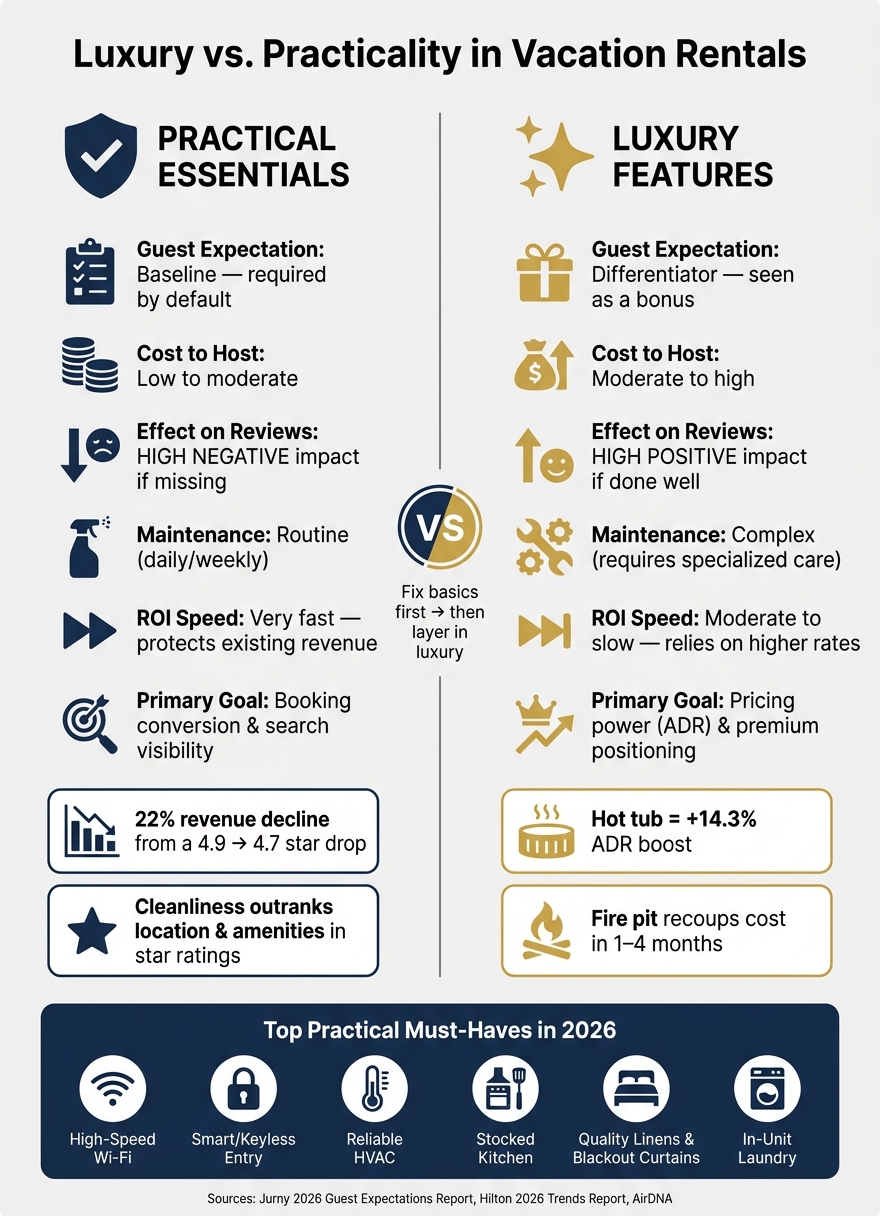
This section highlights where hosts should focus their investments. The table below contrasts the key aspects of practical essentials and luxury features.
| Dimension | Practical Essentials | Luxury Features |
|---|---|---|
| Guest Expectation | Baseline - required by default | Differentiator - seen as a bonus |
| Cost to Host | Low to moderate | Moderate to high |
| Effect on Reviews | High negative impact if missing | High positive impact if done well |
| Maintenance | Routine (daily/weekly) | Complex (requires specialized care) |
| ROI Speed | Very fast - protects existing revenue | Moderate to slow - relies on higher rates to recoup |
| Primary Goal | Booking conversion & search visibility | Pricing power (ADR) & premium positioning |
This breakdown highlights the trade-offs between essentials and luxury. Essentials are about meeting expectations, while luxury features help elevate a property’s appeal.
How Guests React When Things Are Missing
Now, let’s dive into how guests respond when these features are absent. Practical essentials are the backbone of a positive experience, and their failure often leads to significant disappointment.
For example, if a basic amenity like Wi-Fi, air conditioning, or hot water is unavailable, guests feel let down. On the other hand, the absence of a luxury feature, such as a hot tub, is more easily forgiven - as long as the basics are covered. As Jurny explains:
"A property with ordinary amenities that is immaculate gets better reviews than a property with excellent amenities that has one cleaning miss."
The numbers back this up. A drop in ratings from 4.9 to 4.7 stars - often caused by issues like poor bedding or slow communication - can lead to a 22% decline in revenue. This shows how even minor practical failures can have a big financial impact.
The psychology behind this is straightforward. Essentials like fast Wi-Fi and reliable climate control are considered hygiene factors. Guests don’t consciously praise them when they work, but they notice instantly when they don’t. Luxury features, in contrast, create moments of delight when present, but their absence doesn’t ruin the experience - it just makes it unremarkable.
"The amenity arms race matters less than operators think - responsiveness and reliability matter more." - Jurny
Matching the Experience to Different Guest Types
When it comes to creating memorable stays, understanding your guests' unique needs is key. By tailoring amenities and services to specific guest profiles, you can make smarter investments that truly resonate.
Key Guest Profiles and What They Need
Knowing who your guests are helps you focus on the right features. Here's a breakdown of common guest types and what matters most to them:
| Guest Profile | What They Value Most | Key Practical Need | Luxury "Multiplier" |
|---|---|---|---|
| Families | Safety & space | In-unit laundry, full kitchen, childproofing | Large outdoor play/lounge area |
| Business Travelers | Efficiency | High-speed Wi-Fi, dedicated workspace, ample outlets | Premium coffee setup, AI concierge |
| Solo Travelers | Security | 24/7 support, keyless entry | High-end toiletries, quality linens |
| Couples | Privacy | Seamless check-in, comfortable bed | Fireplace, spa-like bathroom, balcony |
| Groups | Socialization | Large common seating, parking, multiple kitchen tools | Smart home entertainment, hot tub |
Take families, for instance - they're more likely to appreciate practical features like a functional dining table that seats everyone over flashy decor. Business travelers, on the other hand, prioritize high-speed internet and a reliable workspace above all else. Interestingly, data shows that 18% of high-quality vacation rental guests value a washing machine more than a spa (17%) or a gym (10%). These insights highlight how guest preferences guide investment decisions.
How Location and Season Shift Expectations
Guest expectations don’t just depend on who they are - they also shift based on where they’re staying and the time of year. For example, a mountain cabin during ski season might draw guests looking for gear storage, a hot tub, and strong water pressure for après-ski showers. In summer, the same property might appeal to hikers seeking outdoor dining areas and a fully stocked kitchen.
The numbers back this up. A hot tub, for instance, boosts the average daily rate (ADR) by 21.6% in rural markets but only by 9.4% in coastal areas. Similarly, a pool has a stronger impact in urban settings (9.1% ADR lift) compared to beach locations (5.9%). As Elliott Caldwell, CEO of Home Team Luxury Rentals, explains:
"Luxury is not created by adding more features - it's created by how well those features work together."
Seasonal updates, like refreshing property photos and fine-tuning descriptions, also help set the right expectations, which can lead to better reviews.
Using Howard to Tailor the Guest Experience
Personalization adds an extra layer of care to the guest experience. While basic amenities are essential, tailored recommendations make a stay feel special.
That’s where Howard comes in. This digital guidebook consolidates property details while offering personalized local tips. For instance, families might get recommendations for kid-friendly parks and restaurants, while business travelers could be directed to nearby coffee shops with fast Wi-Fi and quiet workspaces. Delivered through a QR code or link, Howard provides concierge-like service without requiring constant host involvement. Its AI-powered messaging also responds instantly to guest questions, addressing the security and support needs that solo travelers and families often prioritize.
Steps to Build a Balanced Guest Experience
Guest profiles and location insights are important, but they’re just the starting point. The real challenge lies in putting these insights into action. Most hosts find success by nailing the basics before adding any extras.
Step 1: Perfect the Essentials First
Before diving into luxury upgrades, make sure the basics are flawless. Guests won’t appreciate a fancy perk if the essentials fail. A broken shower, unreliable Wi-Fi, or a faulty AC unit can tank your reviews faster than any high-end feature can recover them.
Cleanliness is the most critical factor tied to overall star ratings - it even outranks location and amenities. Accuracy in your listing is just as important. Negative reviews often stem from guests feeling misled by descriptions that don’t match reality. Regularly inspect appliances and furniture to catch problems before they arise.
Communication also plays a huge role. Aim to respond to guest inquiries in under five minutes. Properties using AI-powered tools that reply within 60 seconds often see a boost in guest satisfaction.
Once these essentials are in top shape, you can start thinking about adding a couple of standout features.
Step 2: Invest in One or Two High-Impact Luxury Features
After locking down the basics, focus on one or two upgrades that align with your property and guest demographic. Choose features that are both desirable and uncommon in your market - this is where you’ll see the biggest return.
For example, data shows that in Gatlinburg, TN, properties with hot tubs earn an average of $45,745 annually, compared to $20,702 for those without - a 121% revenue boost. Installing a hot tub costs between $3,000 and $8,000, with annual maintenance running $500 to $1,200. Similarly, if your guests include remote workers, adding a dedicated workspace could increase host earnings by about 14%.
Once you’ve added these features, it’s essential to integrate them seamlessly into the guest experience.
Step 3: Use Design and Tools to Tie It All Together
The key to a cohesive experience is balancing functionality with standout features. A rainfall showerhead won’t impress if the water pressure is poor, and a high-end espresso machine won’t matter much if the rest of the kitchen feels sparse. Thoughtful touches like blackout curtains, layered bedding, and conveniently placed outlets can elevate the experience without breaking the bank.
Tools like Howard can help streamline this balance. Its digital guidebook combines all the essentials - Wi-Fi details, check-in instructions, house rules, and emergency contacts - with personalized local tips and AI-driven messaging. Guests can access everything they need through a single QR code or link, reducing friction and cutting down on repetitive questions. This combination of operational efficiency and thoughtful personalization often translates into glowing five-star reviews.
Using Guest Feedback to Improve Over Time
Reading and Acting on Guest Feedback
Once your property is set up and running smoothly, guest feedback becomes an essential tool for refining the overall experience. It not only confirms what you're doing well but also highlights areas where you can strike a better balance between comfort and practicality. Feedback generally falls into two categories: practical and luxury-focused. Practical comments often mention issues like something being "broken", "dirty", or "uncomfortable", while luxury-focused feedback might use words like "relaxing", "thoughtful", or "memorable." To stay ahead, pay close attention to recurring themes in your latest reviews - modern travelers tend to rely heavily on recent feedback when deciding where to book. Even a slight dip in ratings can have a noticeable impact on revenue, so catching patterns early is crucial.
Also, take note of frequent guest questions or concerns during their stay. If multiple guests ask about the same topics - like how to use the thermostat, parking details, or check-out procedures - it might be time to clarify those points in your listing. A high number of inquiries paired with low booking conversion rates could signal that potential guests find your listing unclear or too complicated. And as mentioned earlier, cleanliness remains a top priority. These insights can help you refine your property details and create a more seamless hosting experience.
How Howard Helps Identify and Fix Pain Points
Addressing recurring guest issues can be overwhelming, but digital tools make the process much easier. For instance, manually tracking common questions from guests can take up a lot of time. This is where Howard steps in. Using its AI-powered messaging system, Howard monitors which questions come up most frequently. For example, if guests often ask for the Wi-Fi password during check-in, you’ll know to make that information more visible in your digital guidebook.
Howard’s centralized dashboard also allows you to determine whether an issue is isolated or widespread across multiple listings. This makes it easier to prioritize fixes that will have the biggest impact on the guest experience. Hosts using Howard report a 72% reduction in guest questions. Additionally, its review nudge feature - prompting guests to leave feedback at the end of their stay - has led to an average increase of +0.4 stars in ratings. This improvement directly boosts property performance over time. One Superhost shared their experience:
"The review nudge alone has paid for Howard ten times over in the first month." - Daniel K., Superhost
Conclusion: Getting the Balance Right
When it comes to hosting, the basics are non-negotiable. Guests expect cleanliness, reliable Wi‑Fi, seamless check‑in, and prompt communication as the foundation of their stay. As Maya Thornton, Senior Hospitality Editor, wisely notes:
"The hierarchy is clear: first remove pain points, then layer in charm. Reverse that order and hosts risk higher costs and lower returns." - Maya Thornton, Senior Hospitality Editor
Choosing the right upgrades is just as important as nailing the essentials. Not every luxury feature fits every property or appeals to every market. Thoughtful additions can turn a good stay into an unforgettable one. For instance, a fire pit might be perfect for a cozy mountain cabin, while an EV charger is ideal for properties in drive-to destinations - especially as searches for EV-friendly stays jumped over 80% between 2022 and 2023.
Once you've nailed the essentials and chosen the right upgrades, consistency becomes the name of the game. Guests want a stay that works smoothly from start to finish. Tools like Howard make this possible by automating guest communication, identifying recurring issues, and even nudging for reviews - all from a single dashboard. This kind of operational support ensures hosts can deliver both practical reliability and personal touches without being tied to their phones 24/7.
Ultimately, striking the right balance means staying tuned to guest feedback and committing to ongoing improvement. It's about being deliberate in creating experiences that leave a lasting impression.
FAQs
What basics matter most to guests?
Guests care most about cleanliness, quick responses, and useful amenities in vacation rentals. Cleanliness is non-negotiable - any lapses can leave a lasting bad impression. Fast communication and efficient handling of issues also play a big role in keeping guests happy. Practical amenities, such as a well-stocked kitchen, parking, and laundry facilities, are especially valued during extended stays. Ultimately, a smooth, clean, and well-organized experience matters more to guests than over-the-top luxury touches.
When should I add luxury upgrades?
Luxury upgrades can make a big difference when appealing to high-end travelers or justifying premium pricing. Features like hot tubs, high-end furnishings, or other upscale amenities not only boost comfort but also leave a lasting impression on guests. These additions work best when they complement your property’s overall vibe, creating a seamless and memorable stay for those willing to pay extra for added comfort and convenience.
Which upgrades have the best ROI in my market?
When it comes to upgrades that deliver the best return on investment, the sweet spot lies at the intersection of guest satisfaction and revenue growth. For example, adding hot tubs can quickly increase annual income while enhancing the guest experience. Other sought-after features like pools, outdoor spaces, and washers and dryers not only add convenience but also make your property more appealing, leading to more bookings. Don’t overlook parking availability - it’s a practical amenity that many travelers value. To get the most bang for your buck, focus on the amenities that travelers in your market are actively searching for.