Vacation Rentals
Ultimate Guide to Host-Guest Communication Styles
Ultimate Guide to Host-Guest Communication Styles
Clear communication can make or break a guest's experience. Whether you're hosting on Airbnb or similar platforms, how you interact with guests directly impacts their comfort, safety, and reviews. Poor communication can lead to frustration, while timely, warm, and professional messages can boost bookings by 50% and improve your chances of earning Superhost status.
Key Takeaways:
- Text communication matters: Without tone or body language, your words carry all the weight. Choose them carefully to avoid misunderstandings.
- Balance warmth and professionalism: Be approachable but clear. Positive framing (e.g., "Enjoy the quiet after 10 PM" instead of "No noise after 10 PM") leaves a better impression.
- Personalize messages: Tailor communication to guest types (e.g., business travelers, families, international visitors) with small, thoughtful details.
- Timing is crucial: Respond to inquiries within an hour, and use staged messaging (confirmation, pre-arrival, day-of) to keep guests informed without overwhelming them.
- Post-stay follow-ups: A thank-you note and timely review request can turn a one-time guest into a repeat visitor.
This guide breaks down strategies for every stage of the guest journey - from pre-arrival to post-checkout. Plus, tools like Howard can simplify messaging, reduce repetitive tasks, and improve guest satisfaction. Effective communication isn’t just about being polite; it’s about creating a seamless and enjoyable experience for your guests.
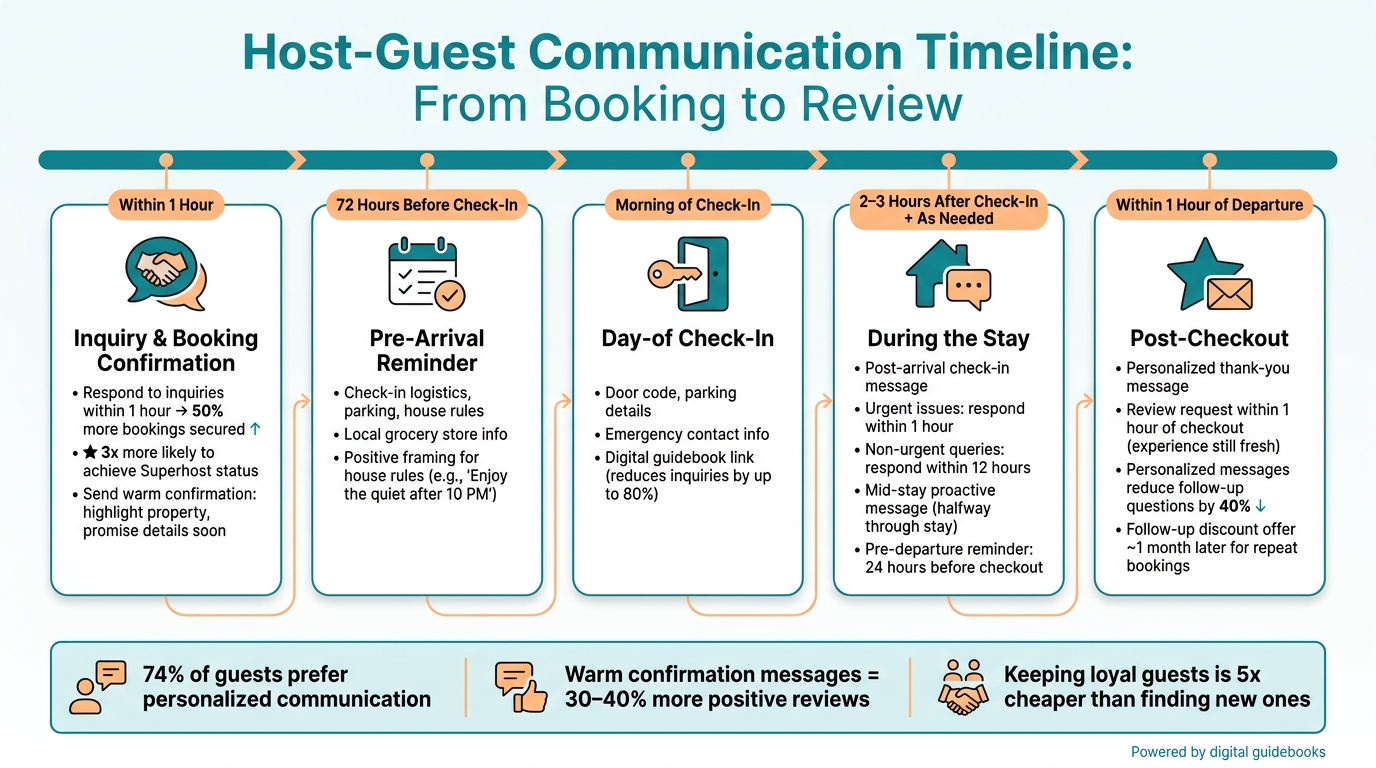
Host-Guest Communication Timeline: From Booking to Review
We send these 5 message templates to every Airbnb guest (and you can copy + paste)
sbb-itb-ec91689
The Basics of Host-Guest Communication
Every message you send shapes how guests feel about their stay - even before they step through the door. Since most host-guest interactions happen via text, you lose the benefit of body language or a friendly smile to convey warmth. That means the words you choose and how you phrase them are incredibly important. Let’s explore how to strike the perfect balance between being welcoming and professional.
Balancing Warmth and Professionalism
Think of your communication style as having two key elements: voice and tone. Your voice reflects your overall personality - whether it’s cheerful, calm, or somewhere in between. Your tone, on the other hand, adapts to the situation, reflecting the attitude you want to convey in each specific message.
The sweet spot is conversational professionalism. Using contractions like "you'll", "we've", or "I'm" makes your messages feel more human and approachable without losing clarity or authority. On the flip side, avoid ALL CAPS (which can feel like shouting) and shorthand like "u" or "thx", as these can come across as unpolished or careless.
A great trick is to use positive framing. For example, instead of saying, "No noise after 10 PM", try something like, "Enjoy our peaceful neighborhood after 10 PM." This approach shifts the focus from restriction to shared values, such as respecting neighbors.
"If your messages are ambiguous, people will automatically read the most negative emotions and intentions to it." - Rowan, Hospitable
Always end your messages with a friendly offer to help. Something as simple as, "If there’s anything else you need, feel free to reach out", reassures guests that you’re approachable and invested in their stay. These thoughtful touches can go a long way, especially when tailored to different types of guests.
Adjusting Your Style for Different Guests
Once you’ve nailed clear and balanced messaging, take it a step further by personalizing your communication to suit each guest’s unique needs. For example, a business traveler on a tight schedule will appreciate quick, practical details - like fast Wi-Fi, a desk setup, or nearby coffee spots. A family traveling with kids, however, might value tips about local parks, safety notes for stairs or pools, and the location of a high chair or toys.
Personalization doesn’t have to take much time. Small gestures, like addressing guests by name or referencing their trip purpose, can make a huge difference. In fact, 74% of guests say they prefer personalized stays over generic interactions. A quick note like "Hope your work trip goes smoothly!" or "We’re excited for your family to enjoy the backyard" takes just seconds to write but leaves a lasting impression.
Here’s a quick guide to tailoring your communication:
| Guest Type | Communication Focus | Key Details |
|---|---|---|
| Business Traveler | Efficiency & productivity | Wi-Fi speed, desk setup, nearby coffee shops, flexible check-in |
| Family | Safety & convenience | High chair/toy locations, local parks, pool or stair safety notes |
| International Visitor | Clarity & accessibility | Simple language, clear directions, multilingual support if available |
| Pet Owner | Responsibility & care | Pet-specific house rules, nearby vet contacts, location of pet towels |
The goal isn’t to create entirely different messages for each guest but to make small, thoughtful adjustments. These tweaks show that you’ve paid attention to their booking details and genuinely care about their experience.
Pre-Arrival Communication: Making a Good First Impression
Once a guest books your property, their mindset shifts from questioning their decision to eagerly anticipating their stay. A warm and confident confirmation message can immediately reassure them - and guests who receive such a message are 30–40% more likely to leave a positive review. That first interaction is crucial, as it sets the tone for the entire experience. Let’s explore how to craft pre-arrival messages that strike the right balance between warmth and professionalism.
Responding to Inquiries and Booking Confirmations
Timing is everything when it comes to inquiries. Responding within one hour not only boosts your chances of securing 50% more bookings but also makes you three times more likely to achieve Superhost status. Quick responses demonstrate attentiveness, which is a cornerstone of great hospitality.
For booking confirmations, keep it short and welcoming. A simple message that acknowledges the reservation, highlights something exciting about the property, and promises more details soon is ideal. For example: "We're excited to host you! Stay tuned for check-in details and tips to make your stay amazing." Save the logistics for later messages.
The secret to effective pre-arrival communication lies in staged messaging - breaking down information into manageable parts and sending them at the right times. Here’s a simple schedule to follow:
| Message | Timing | What to Include |
|---|---|---|
| Booking Confirmation | Immediately | Warm greeting, property highlight, assurance that details are coming |
| Pre-Arrival Reminder | 72 hours before | Check-in logistics, parking, house rules, local grocery store info |
| Day-of Message | Morning of check-in | Door code, parking details, emergency contact info |
This approach ensures guests stay informed without feeling overwhelmed.
Once the booking is confirmed, concise and clear logistical details help guests feel prepared and secure.
Sharing Check-In Details and House Rules
When it’s time to send the logistics, clarity is key. Start with the essentials - door codes, check-in times, and parking instructions - right at the top of your message. Make sure it’s formatted for easy reading on a mobile device.
House rules should be presented thoughtfully. Instead of sounding restrictive, frame them in a way that enhances the guest experience. For example, "Enjoy the serenity of our neighborhood after 10 PM" is much more inviting than "No noise after 10 PM".
To cut down on repetitive questions, consider using a digital guidebook like Howard. Hosts report that these tools can reduce guest inquiries by up to 80%, allowing you to focus on creating a memorable stay.
"I present the link to the guidebook first because it generally answers 99% of the questions we get asked." - Jason Wolohan, Host
Finally, double-check all the details you share. Errors in door codes or directions are among the top causes of stressful check-ins. Providing accurate, verified instructions not only builds trust but also ensures a smooth start to your guests’ stay.
During the Stay: Staying Responsive Without Overstepping
Once guests have checked in, your role shifts to quietly supporting their experience. The key is to stay available without making them feel monitored or overwhelmed. Sending too many messages can backfire - what really matters is the quality of your communication and choosing the right moments to engage.
Here’s how to set clear response expectations and determine when to reach out.
Setting Response Time Expectations
Not every guest inquiry requires an immediate response. For example, a late-night lockout needs urgent attention, while a casual restaurant recommendation can wait. A good rule of thumb is: respond to urgent issues within one hour and handle non-urgent questions within 12 hours. To ensure you catch critical messages, enable notifications on your apps and devices.
When problems arise, it’s essential to acknowledge them right away and provide a clear plan to resolve the issue. As Dom Trovato of The Host Report emphasizes:
"The goal isn't just to fix the problem - it's to make the guest feel heard, respected, and reassured that they're in good hands."
If you’re unavailable for any reason, having a co-host or backup contact ready - and letting guests know about them in advance - can be a lifesaver.
When to Reach Out vs. When to Wait
Knowing when to engage with guests is just as important as how quickly you respond.
For example, a short message a few hours after check-in, like "Hope you're settling in well! Let us know if you need anything," shows you care without being intrusive. After that, take cues from their responses. If they reply with brief, one-word answers, it’s best to step back. On the other hand, if they’re chatty, they might enjoy a local tip or suggestion for something to do during their stay.
Here’s a simple framework to guide your communication:
| Communication Phase | Approach | Timing |
|---|---|---|
| Post-Arrival | Proactive | 2–3 hours after check-in |
| Mid-Stay | Proactive (if relevant) | Halfway through the stay |
| Urgent Guest Issue | Immediate response | Within 1 hour of contact |
| Non-Urgent Guest Query | Reactive | Within 12 hours of contact |
| Pre-Departure Reminder | Proactive | 24 hours before checkout |
When you provide guests with tools like a digital guidebook (e.g., Howard) or printed instructions for essentials like Wi-Fi or thermostat settings, you can reduce the need for them to reach out at all. This allows them to enjoy their stay with minimal interruptions while still feeling supported.
Post-Checkout Communication: Leaving a Good Last Impression
Following up after checkout can turn a one-time visitor into a repeat guest and even secure glowing reviews.
Sending Thank-You Messages and Asking for Reviews
Timing is everything when it comes to post-checkout communication. Start with a thank-you message the night before checkout, including clear departure instructions and a warm send-off. Then, follow up within an hour of their departure with a brief, personalized request for a review.
"Review-request messages sent within one hour of checkout outperform those sent later, as the experience is still fresh." - Hostrexa Team
Make your message personal. Include the guest’s name and details about their stay. As Hospitable notes, "A well-crafted thank-you message can set you apart from other hosts. This small gesture will show your commitment to exceptional hospitality and help build positive relationships." Guests can spot generic, copy-paste messages a mile away, and they don’t leave the same impression. In fact, personalized messages have been shown to reduce follow-up questions by 40% compared to generic ones.
When asking for a review, keep it simple and low-pressure. A line like, "If you have a moment, we'd love to hear about your stay - your feedback helps us improve and helps other travelers find us," works far better than a lengthy or overly formal ask. About a month after checkout, consider sending a follow-up offering a small discount on future direct bookings. It’s a small touch that encourages loyalty and repeat visits.
If any issues crop up after checkout, handle them with the same level of care and attention.
Handling Issues That Come Up After Checkout
Post-checkout concerns can directly affect your reputation, so addressing them promptly is essential. Even if you don’t have an immediate solution, a quick acknowledgment reassures the guest that their concerns are being taken seriously. This can go a long way in preventing frustration from escalating into a negative review.
When responding, stay calm and focus on solutions. Avoid vague responses like, "We'll look into it soon." Instead, offer a clear next step, such as, "I’ll follow up within 24 hours after reviewing your concerns."
"When issues arise, focus on providing solutions rather than explanations or excuses." - Hosthub
If a guest's tone is aggressive, keep your language neutral and redirect the conversation toward resolving the issue. And if their feedback leads to meaningful changes in your operations, let them know. Closing the feedback loop shows guests that their input matters and helps to build long-term trust.
Tools That Help Hosts Communicate Better
Managing guest communication can feel overwhelming, especially with multiple properties or high booking volumes. Thankfully, there are tools designed to simplify the process, reduce repetitive tasks, and help you focus on creating memorable guest experiences.
How Howard Supports Guest Communication
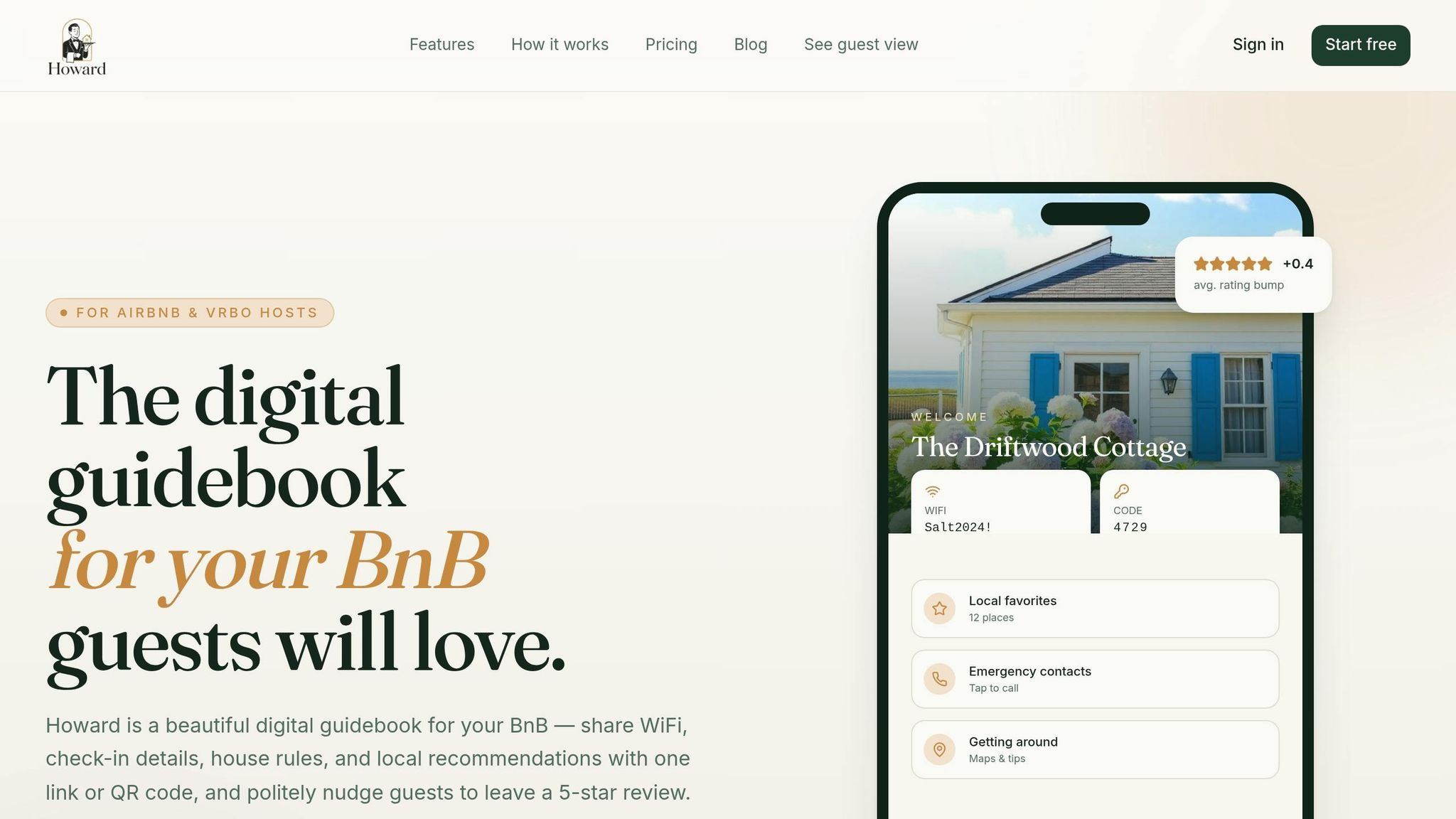
Howard is a digital tool tailored for Airbnb and Vrbo hosts. It consolidates important details like WiFi information, lockbox codes, house rules, emergency contacts, and local recommendations into one shareable link or QR code. This setup not only reduces guest inquiries by 72% but also increases ratings by an average of 0.4 points.
"My superhost rating finally stopped slipping. Guests stop messaging me at midnight asking about the WiFi." - Margaret L., Host of 3 properties
Howard goes beyond a simple guidebook by offering AI-powered guest messaging. This feature instantly answers common questions, while more complex issues are routed to you via Slack or email. Additionally, its review nudges send automated reminders on the final day of a guest’s stay, encouraging timely feedback.
"The review nudge alone has paid for Howard ten times over in the first month." - Daniel K., Superhost
For hosts with one property, Howard’s Solo Host plan is free. If you manage multiple properties, its centralized dashboard ensures consistency and efficiency across all listings.
Using Dashboards and Message Templates
When juggling multiple properties, a centralized dashboard becomes a game-changer. Without one, it’s easy to lose track of messages, send outdated instructions, or miss guest details. Howard’s dashboard simplifies this by allowing you to manage everything in one place. Features like the duplicate guidebook tool make it quick to replicate settings across listings, ensuring consistency.
Personalized communication is key - 74% of guests prefer tailored messages over generic ones. Howard’s dynamic templates let you automate messages while still including personal touches like guest names or check-in dates. This approach helps maintain a professional yet warm tone.
Experienced hosts often rely on an "AI drafts, host approves" model. Automation handles routine messages - like booking confirmations, pre-arrival instructions, and checkout reminders - while you step in for sensitive or unique situations. Considering that a typical booking generates between 15 and 25 messages, automating the repetitive parts gives you more time to focus on meaningful guest interactions.
Conclusion: Building Better Guest Relationships Through Clear Communication
Hosting is about more than just providing a clean space or a convenient location - it's about how your guests feel from the moment they hear from you until long after their stay. Did you know that 78% of guests consider clear communication the most important part of their experience? That stat alone highlights just how much your words matter.
The strategies outlined here work together seamlessly. A friendly, conversational tone builds trust. Sending proactive pre-arrival messages helps ease any nerves. Timely check-ins show you value their time, and thoughtful post-checkout follow-ups can transform a one-time guest into a repeat visitor. Plus, keeping loyal guests is far more cost-effective - about five times less expensive - than finding new ones.
"In 2026, effective communication is your superpower - driving 5-star reviews, higher bookings, and Superhost status." - Greenmoov
Once you’ve nailed the basics, technology can help take things to the next level. Tools like Howard are designed to simplify your workload by automating repetitive tasks. Whether it’s answering FAQs, sending reminders, or organizing property details, automation frees you up to focus on creating genuine connections with your guests.
Even small tweaks to your communication style can make a big difference. Start with one area - like improving your pre-arrival messages or crafting a thoughtful checkout note - and build from there. These small changes add up quickly, and your guests will notice. Over time, those little improvements will show up in glowing reviews and stronger guest relationships.
FAQs
What’s the best tone for house rules?
The tone for house rules should be clear, respectful, and professional. This approach makes your expectations easy to follow without sounding harsh or overly strict. A balanced tone like this helps create a welcoming and positive experience for both you and your guests.
How many messages is too many?
Sending more than three to five messages might come across as too much and could overwhelm your guests. That said, the ideal number of messages can vary based on the situation and what your guest prefers. The key is to keep your communication clear, concise, and relevant to create a positive interaction.
When should I automate guest messaging?
Automate guest messaging to take care of routine tasks like sharing check-in details, answering common confirmation questions, and requesting post-stay reviews. Aim to automate about 80% of logistical communications - things like Wi-Fi codes and emergency instructions. This ensures guests receive important information quickly and consistently, freeing up your time to focus on delivering personalized experiences or addressing more complex guest needs.