Vacation Rentals
Vacation Rental House Rules: Complete Checklist for Hosts
Vacation Rental House Rules: Complete Checklist for Hosts
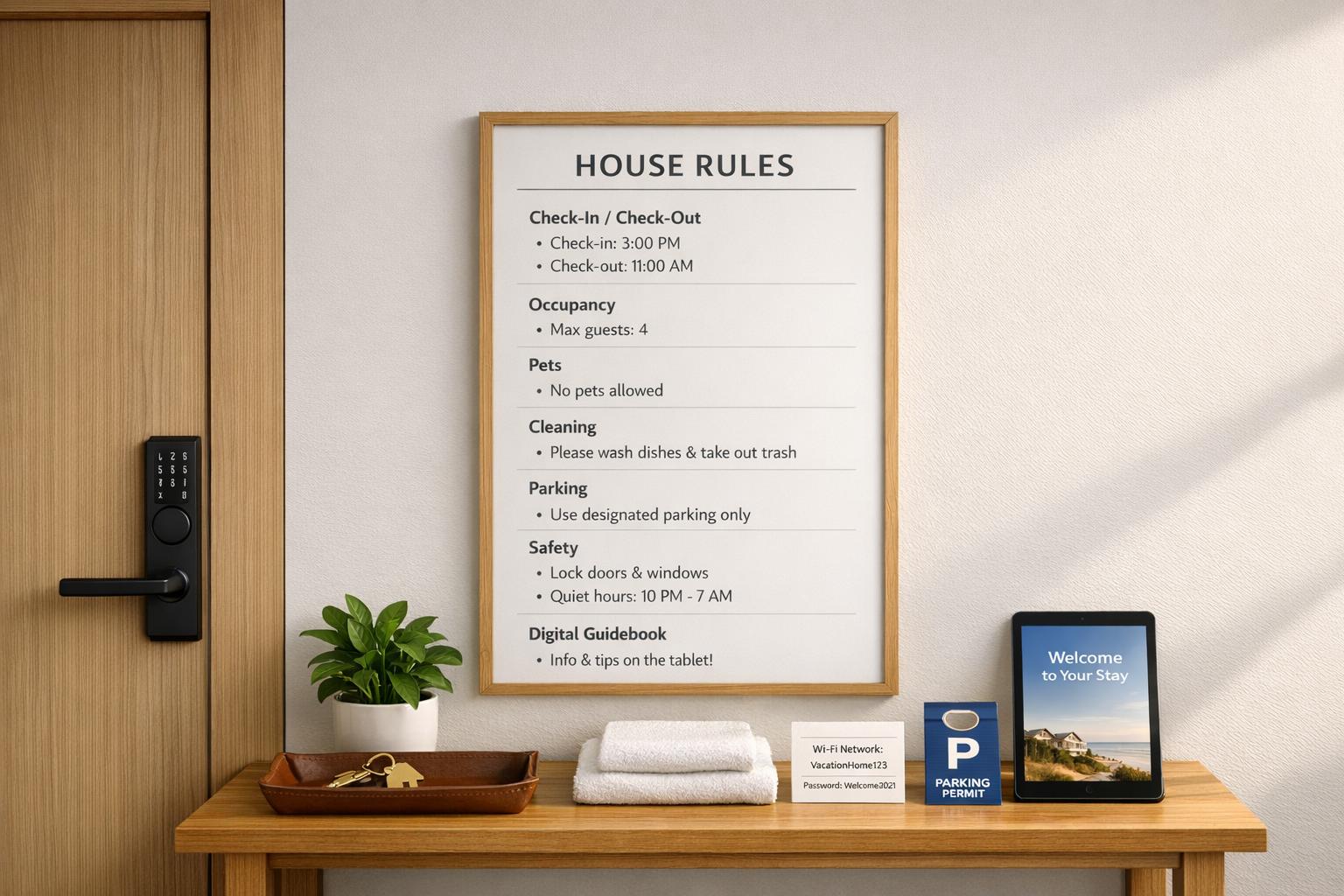
When hosting vacation rentals, clear house rules are key to protecting your property, avoiding misunderstandings, and ensuring a smooth experience for both you and your guests. These rules help set expectations, reduce repetitive questions, and improve guest satisfaction. Here's a quick overview of what to include:
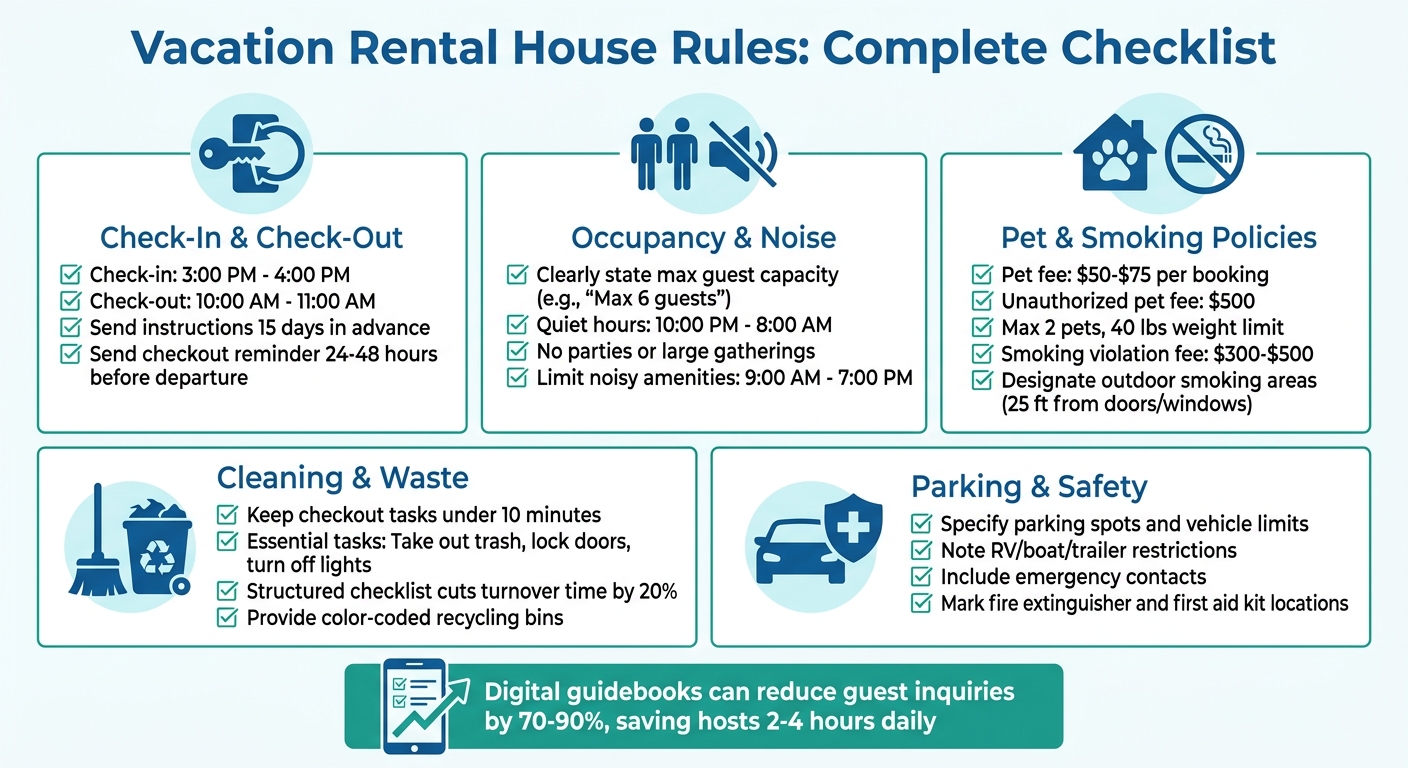
- Check-In and Check-Out: Provide clear instructions, set specific times (e.g., check-in at 3:00 PM, check-out by 10:00 AM), and send reminders in advance.
- Occupancy and Noise: Define guest limits, enforce quiet hours (e.g., 10:00 PM–8:00 AM), and prohibit parties or large gatherings.
- Pet and Smoking Policies: Specify pet rules (e.g., fees, weight limits) and smoking restrictions (e.g., non-smoking indoors, designated outdoor areas).
- Cleaning and Waste: Keep checkout tasks simple (e.g., take out trash, lock doors) and provide clear waste disposal instructions.
- Parking and Safety: Outline parking rules, restricted areas, and safety protocols (e.g., fire extinguisher locations, emergency contacts).
Using tools like Howard’s digital guidebook can simplify rule sharing and guest communication, ensuring everyone stays informed. A little preparation goes a long way toward creating a positive hosting experience.
Vacation Rental House Rules Checklist for Hosts
Check-In and Check-Out Procedures
Check-In Guidelines
Providing clear, straightforward check-in instructions can save both you and your guests from unnecessary confusion. Start by placing the full property address right at the top of your instructions - this makes it easy for guests to locate at a glance. If your property is tricky to find using GPS or mapping apps, include detailed driving directions to guide them.
Set the check-in window between 3:00 PM and 4:00 PM. This timing allows for adequate cleaning and minimizes scheduling conflicts. Make sure to send your check-in instructions 15 days in advance so guests have plenty of time to prepare.
When it comes to access, be specific. For smart locks, share the access code and step-by-step instructions for entry. If you use a lockbox, mention its exact location and the combination.
Don’t forget the little details that make a big difference:
- Parking information
- WiFi password
- A local contact in case of access issues
For guests arriving late, leaving the porch lights on can make their arrival much smoother.
Check-Out Requirements
Set the checkout time between 10:00 AM and 11:00 AM to allow ample time for cleaning before the next guest arrives. To ensure guests remember, send a checkout reminder 24 hours before departure. For longer stays, consider extending this reminder to 48 hours.
Keep checkout tasks simple and focused on what’s truly necessary. If you’re charging a cleaning fee, avoid overwhelming guests with an extensive to-do list. Stick to the essentials that help streamline the turnover process.
"Clear, friendly checkout instructions make it easy for guests to leave on a positive note." - iGMS
Basic checkout tasks should include:
- Taking out the trash
- Securing all windows and doors
- Turning off lights
- Adjusting the thermostat
- Returning keys or confirming smart lock closure
Using a structured checkout checklist can cut turnover time by up to 20%. Keep the tone friendly and approachable to leave a lasting positive impression. Encourage guests to report any damages or maintenance needs before they leave so you can address them promptly.
Occupancy, Noise, and Event Policies
Occupancy Limits
Clearly communicate the maximum guest capacity, such as "Max 6 guests", and specify whether this number includes children and daytime visitors. This clarity helps avoid any misunderstandings or unauthorized gatherings.
Include these occupancy rules across multiple platforms - your listing, confirmation emails, digital guidebooks, and even on-property signage. This ensures guests are reminded of the rules throughout their stay.
Explain that these limits are in place for safety, compliance with local regulations, and maintaining positive relationships with neighbors. Require guests to provide names and contact information in the rental agreement to reinforce accountability.
Be upfront about the consequences of exceeding these limits. For instance, guests may face extra fees, cancellation of their stay without a refund, or forfeiture of the security deposit. Most booking platforms require guests to agree to these terms before confirming their reservation.
Once occupancy rules are set, implementing quiet hours can help create a peaceful environment for everyone.
Quiet Hours and Noise Restrictions
Set quiet hours from 10:00 p.m. to 8:00 a.m. to balance guest enjoyment with minimizing disturbances. Address common noise sources like music, loud conversations on balconies, and the use of amenities such as pools or hot tubs.
Encourage guests to be considerate with a friendly yet firm tone. For example, you could say, "Please help us maintain good relations with our neighbors by keeping noise levels conversational after 10:00 p.m." If parts of your property, like a balcony, are close to a neighbor’s home, highlight this in your house map so guests know where extra care is needed.
"The optimal tone of voice is 70% warm and inviting, and 30% firm. Try to have some fun with it. Make guests feel like they're visiting an old friend." - Alex Concepcion, Spire Vacation Rental Consulting
Consider limiting the hours for high-noise amenities like washers, dryers, or hot tubs to between 9:00 a.m. and 7:00 p.m. Violations of quiet hours may result in forfeiture of the security deposit or even cancellation of the stay.
Event and Party Restrictions
Strictly forbid parties, large gatherings, or unsanctioned events. Require prior approval for any visitors not included in the original reservation. Some hosts opt to prohibit outside visitors entirely to avoid open-invitation situations.
After a booking is made, follow up with questions about the purpose of the trip and request the names of all guests in the party. This can help identify any red flags. For example, if a guest inquires about extra parking for friends during a one-night stay, it may indicate plans for a party. In such cases, you can provide this evidence to the booking platform to cancel the reservation.
Airbnb's global party ban led to a 44% drop in party reports year-over-year since August 2020. Measures like these not only protect your property but also maintain good relationships with neighbors. Make it clear that unauthorized parties will result in immediate eviction, termination of the rental agreement without a refund, and possible loss of the security deposit.
Pet and Smoking Policies
Pet Guidelines
Make it clear whether pets are allowed in your space. If you do allow them, set specific rules - like a limit of two pets per booking and a maximum weight of 40 lbs. If your insurance or local laws require it, include any breed restrictions in your policy.
Only accept pets that are house-trained, flea-free, and up-to-date on vaccinations. To keep your space clean, don’t allow pets on furniture, and ask guests to clean up pet waste immediately. Pets should never be left unsupervised and must be leashed when outside unfenced areas.
Charge a pet fee between $50 and $75 per booking to help cover extra cleaning costs. To discourage violations, set a $500 fee for unauthorized pets, which can be used for deep cleaning. Keep in mind, service animals - like guide dogs - must always be welcomed free of charge, as required by accessibility laws.
Smoking Rules
State whether your property is entirely non-smoking or if outdoor smoking is allowed. Be specific and include all forms of smoking, such as cigarettes, cigars, vaping, e-cigarettes, and marijuana, to avoid confusion.
If outdoor smoking is permitted, designate specific areas like a patio or balcony. Require guests to stay at least 25 feet away from doors and windows to prevent smoke from entering the home. Provide ashtrays and strictly enforce rules against littering cigarette butts in lawns or gardens.
For indoor smoking violations, charge a fee between $300 and $500 to cover the cost of deep cleaning. Explain to guests that smoke odors are tough - and expensive - to remove from items like curtains, furniture, and linens, so they understand the importance of the policy.
Cleaning, Waste Disposal, and Property Care
Cleaning Expectations
These cleaning guidelines are designed to complement the checkout process and ensure a seamless experience for your guests.
Keep checkout tasks simple and quick - something guests can complete in under 10 minutes. For example, ask them to wash dishes or load and start the dishwasher. They should also strip bed linens and gather all used towels and bath mats in a designated spot, such as the laundry room or bathtub.
Encourage guests to collect their belongings and leave the property tidy. This includes straightening up common areas. Before leaving, they should turn off all lights, heating or cooling systems, and small appliances. Additionally, ensure they close and lock all windows and doors for security.
Avoid asking guests to handle intensive tasks like deep cleaning, running laundry, or yard work - especially if you charge a cleaning fee. Requests like these can lead to negative feedback.
Trash and Recycling Instructions
After completing cleaning tasks, managing waste effectively is key to a smooth property turnover.
Let guests know exactly where trash and recycling bins are located (e.g., "in the garage on the left side") and place bins in high-use areas like kitchens, bathrooms, bedrooms, and patios. Use color-coded bins with clear text and image labels to make sorting waste easy, even for non-English speakers.
Include local recycling rules in the house manual for clarity. Keep extra garbage bags in accessible spots, such as under the sink or in the pantry. Ask guests to bag all trash and place it in the designated on-site bins, but don’t require them to take the bins to the curb - this should be handled by your cleaning crew. Also, remind guests that hazardous materials like oil, gasoline, or batteries should never be disposed of in standard bins.
To ensure guests remember these tasks, send automated checkout reminders 1–2 days before their departure. Consider providing scented trash bags or placing deodorizers at the bottom of bins to help minimize odors after checkout.
sbb-itb-ec91689
Parking, Property Access, and Safety Protocols
Parking Rules
Make sure to outline where guests can park, such as driveway spots or a garage, and clarify any limits - like allowing up to two vehicles. Highlight restrictions for RVs, boats, or trailers, and include local parking rules such as street sweeping schedules, overnight parking bans, or the need for permits. If certain areas, like a garage, are reserved for owner use, clearly state that these are off-limits to guests. Remind guests not to block sidewalks or neighbors’ driveways, and mention any neighborhood speed limits, such as 30 mph. Lastly, encourage guests to lock their vehicles and secure their belongings, as hosts usually aren’t liable for stolen items.
Once parking details are clear, it’s important to address property access and use.
Restricted Areas and Property Use
Use a digital guidebook to note any areas guests shouldn’t access, like locked storage closets or utility rooms. While physical locks can help, clear instructions are essential to avoid confusion. For shared amenities like pools, hot tubs, or fire pits, establish rules to ensure safety. For example, you might prohibit glassware near pools and require adults to supervise children at all times.
"I think what most hosts either forget or, more often, aren't clear about is the areas that guests have access to and to what extent" - Jasper Ribbers, Get Paid for Your Pad
These details naturally lead into broader safety and security reminders.
Safety and Security Measures
Ask guests to secure the property by locking all doors and windows whenever they leave. Include emergency contact numbers and the locations of safety equipment - like fire extinguishers and first aid kits - in your welcome guide. If you have a fireplace or outdoor fire pit, stress that fires must be fully extinguished before leaving the area. Encourage guests to report damages or safety concerns as soon as they notice them, rather than waiting until checkout. For power or utility issues, instruct guests to contact you instead of trying to access control panels or circuit breakers themselves. Finally, provide thermostat guidelines to balance energy efficiency with comfort, and remind guests to turn off lights, fans, and appliances when they leave the property.
Using Howard to Share and Manage House Rules
Digital Guidebook Features
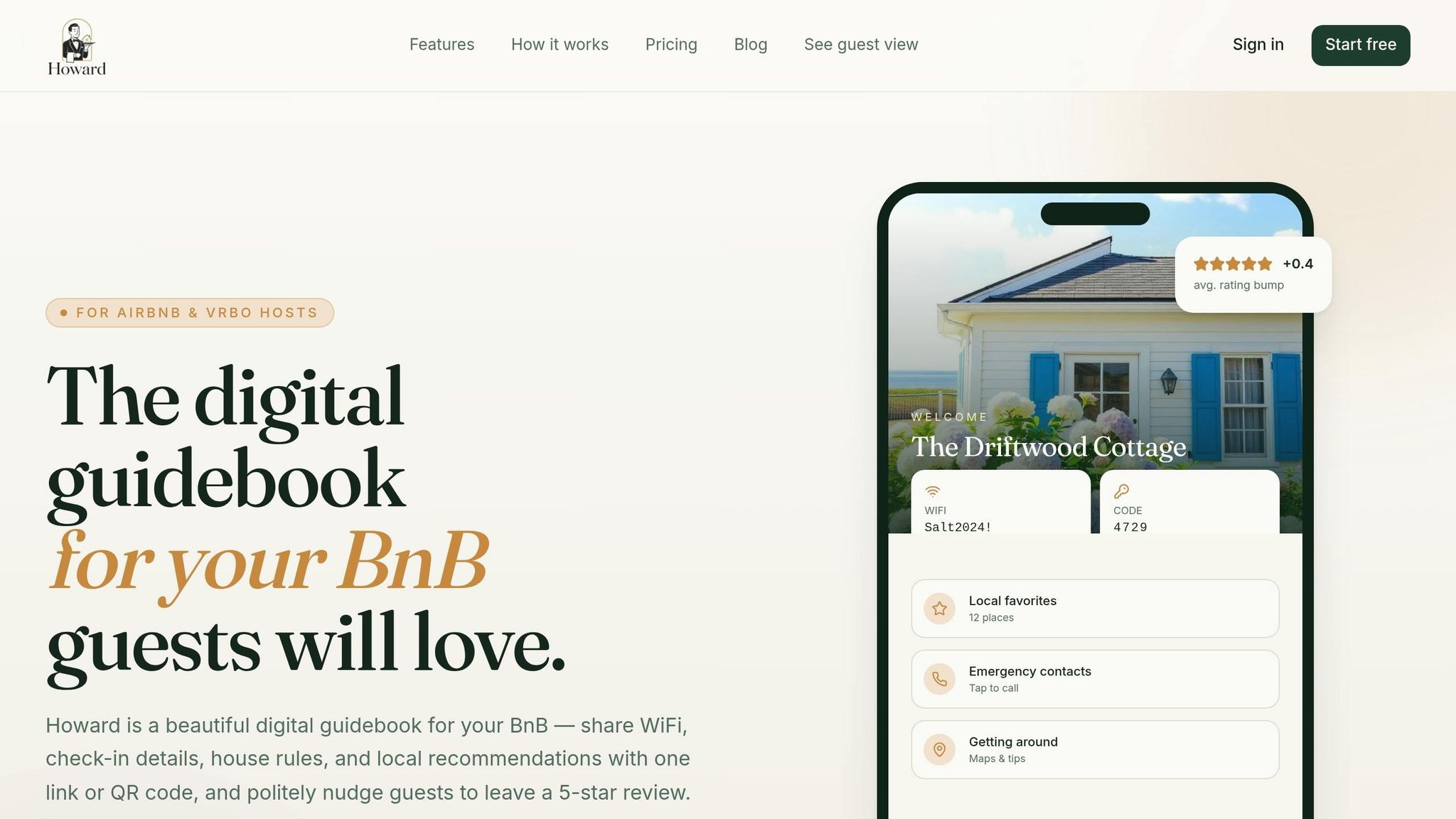
Howard offers a streamlined way to manage and share house rules, leveraging digital tools to make life easier for both hosts and guests. With Howard, all your property details - house rules, FAQs, and more - are stored in a single, web-based guidebook. Guests can access this guidebook instantly through a shareable link or QR code, no app download required. It’s designed for convenience, allowing guests to pull up key information right in their mobile browser without hunting through emails.
The guidebook is user-friendly and customizable. You can include icons, photos, and clear formatting to make rules easy to scan and remember. Plus, updates happen in real time. For instance, if you adjust the checkout time, every guest sees the change immediately.
Howard’s pricing is straightforward. The Solo Host plan is free and covers one property, while the Superhost plan costs $12 per property per month. The Superhost plan supports unlimited properties and offers extras like smart review reminders and custom branding. Both plans include a centralized dashboard, making it easy to manage multiple guidebooks without jumping between platforms.
By integrating this digital guidebook into your hosting process, you simplify communication and ensure guests have quick, clear access to the information they need.
Benefits of AI-Powered Support
Howard doesn’t just stop at guidebooks - it also uses AI to improve guest communication. Its AI-powered messaging system answers common questions about house rules and property details around the clock. The system pulls information directly from your digital guidebook, even citing its sources (e.g., "House Manual → Connectivity") to provide clear and trustworthy responses.
"Reasoning AI is moving guest messaging from guesswork to clear, cited answers your team can trust." - Enso Connect
This AI system can handle up to 70%-90% of guest inquiries, saving hosts significant time - up to 2-4 hours daily for those managing multiple properties. Most questions are addressed in under 15 minutes, even when they’re complex. For example, it can combine answers about parking, dining options, and trash schedules into one comprehensive reply. When it comes to sensitive or complicated issues, the system escalates them to a human with all the necessary context included.
Conclusion
Every aspect of your house rules, from check-in procedures to pet policies, plays a crucial role in ensuring guests have a smooth and enjoyable experience while also safeguarding your property. When guests are well-informed about what to expect, they feel more comfortable and confident during their stay. Clear guidelines also help avoid misunderstandings and encourage harmonious interactions with neighbors by addressing noise and parking expectations effectively.
The goal of house rules isn’t to impose limits but to provide clarity. Explaining the purpose behind each rule - like protecting delicate flooring or maintaining good neighborly relations - often encourages guests to respect and follow them more willingly.
With Howard's digital guidebook, keeping your house rules accessible and up-to-date has never been easier. Guests can quickly access essential information directly on their smartphones, and the AI-powered messaging system handles common questions 24/7, saving you time and reducing repetitive inquiries.
FAQs
How do I enforce house rules without upsetting guests?
The key to enforcing house rules lies in clear and kind communication right from the start. A great way to begin is by providing a warm welcome note that outlines essential rules, such as quiet hours, pet policies, and maximum occupancy. Present these rules as helpful guidelines designed to make everyone’s stay more enjoyable, rather than as strict restrictions.
You can also use pre-arrival messages or check-in reminders to gently reinforce these rules. If any issues arise, address them calmly and privately. This approach helps maintain a positive and respectful tone, ensuring your guests feel valued while still respecting your house rules.
What rules should be in my listing vs. in my house manual?
When creating your listing, include key rules that influence booking decisions. These might cover occupancy limits, check-in/check-out times, pet policies, and noise or smoking restrictions. Outlining these upfront sets clear expectations for potential guests.
For more detailed guidance during their stay, use a house manual. This can provide step-by-step instructions for things like using amenities, parking arrangements, or safety protocols. It not only reinforces your rules but also improves the guest experience and keeps things running smoothly.
What fees can I charge for rule violations?
You can impose fees for specific rule violations, such as hosting extra guests, causing noise disturbances, property damage, or smoking. To enforce these charges fairly, make sure these fees are clearly stated in your house rules. This transparency protects your property and encourages guests to follow the guidelines. Clear communication of these rules can help prevent misunderstandings and make managing your rental much easier.