Vacation Rentals
How to Write Clear House Rules for Guests
How to Write Clear House Rules for Guests
If you're hosting guests, clear house rules are essential. They protect your property, ensure smooth stays, and help avoid misunderstandings. Key points to include:
- Non-negotiable rules: Smoking bans, quiet hours (e.g., 10 PM–8 AM), guest limits, and pet policies.
- Clarity and tone: Use friendly, specific language. Example: Instead of "NO SMOKING", say, "Please avoid smoking indoors to prevent extra cleaning fees."
- Explain why: Add brief reasons for rules. Example: "Quiet hours help maintain good relationships with neighbors."
- Organize rules: Group them by stages (arrival, during stay, departure) for easy reference.
- Share effectively: Use digital tools or QR codes for quick access and update rules as needed.
The goal is to set expectations while keeping guests informed and comfortable. A well-structured approach ensures everyone has a great experience.
How to Write Clear House Rules for Guests: A Step-by-Step Guide
Define Your Goals and Priorities
The Purpose of House Rules
House rules do more than set boundaries; they protect your property, ensure guest safety, and maintain good relationships with neighbors. They also double as an informal marketing tool. When guests read your rules before booking, they can quickly determine if your place suits their needs. As Hospitable explains:
"Your Airbnb rules for guests are part of your marketing. They let travelers know if your space is suitable for them, and if they're the right guests for you."
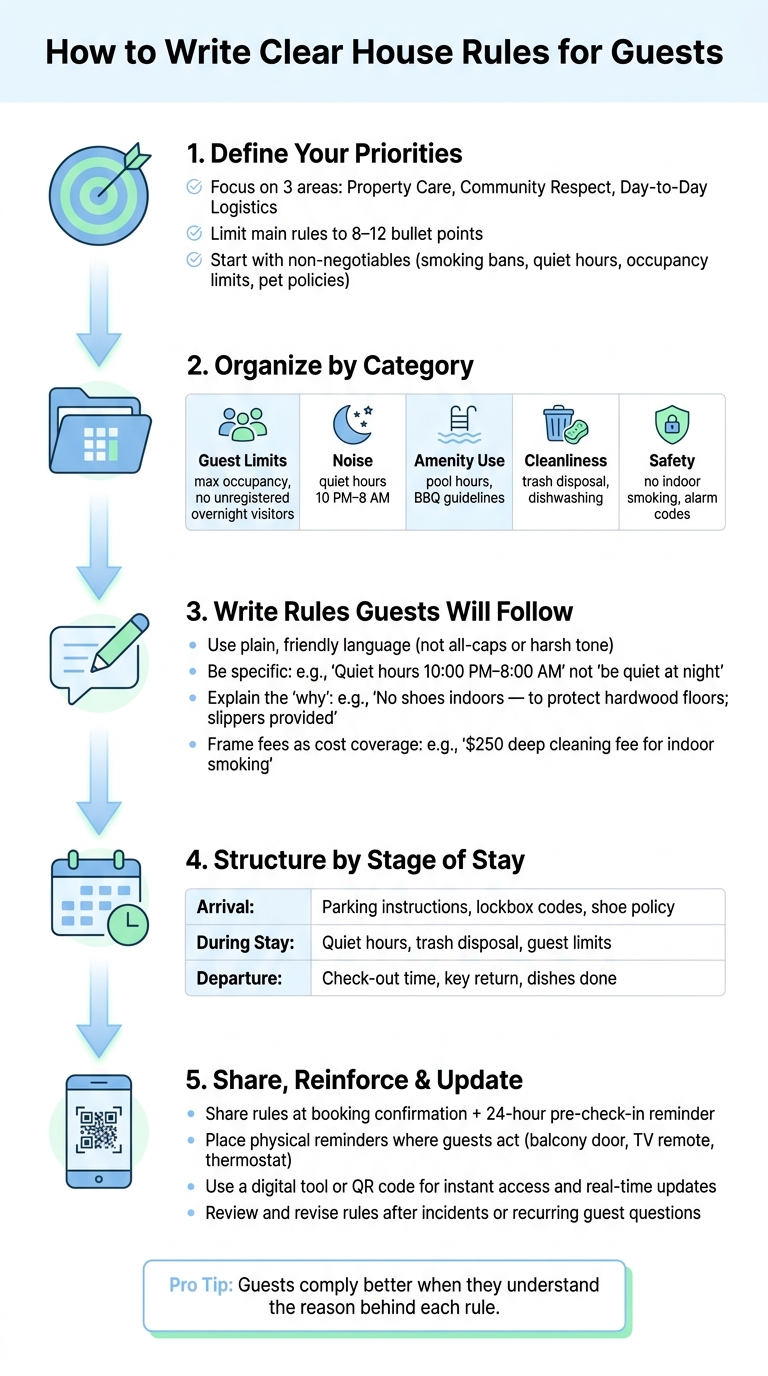
Your rules should address three main areas: property care, community respect, and day-to-day logistics (like check-in times or trash disposal). Covering these bases not only sets expectations but also reduces the number of questions guests might ask. Once you’ve outlined these, focus on the rules that are absolutely critical.
Which Rules to Include First
Start with the non-negotiable rules - those that, if broken, could lead to ending the guest's stay or filing a claim. As Evelyn Badia of The Hosting Journey points out:
"A house rule is something that, if broken, can be used to evict a guest."
Key rules to prioritize include limits on occupancy, bans on smoking or vaping, quiet hours (like 10 PM–8 AM), and any pet restrictions. These rules protect you legally and financially while also keeping neighbors happy. Experts suggest sticking to 8–12 bullet points for your main listing rules, keeping it concise enough to inform without overwhelming potential guests.
Leave out minor preferences or instructions better suited for a house manual. For example, the manual can explain how to use the dishwasher, while house rules should cover what happens if someone smokes indoors.
How to Categorize Your Rules
Organizing your rules into categories makes them easier for guests to understand. Instead of presenting a long, unstructured list, group your rules logically so guests can quickly find the information they need.
| Category | Examples |
|---|---|
| Guest Limits | Maximum occupancy, no unregistered overnight visitors |
| Noise | Quiet hours after 10 PM, no outdoor speakers at night |
| Amenity Use | Pool hours, fireplace instructions, BBQ guidelines |
| Cleanliness | Dishwashing policy, trash disposal schedule, no food in bedrooms |
| Safety | No indoor smoking, emergency exit info, alarm codes |
This approach not only improves clarity for your guests but also makes it easier for you to update the rules when needed.
sbb-itb-ec91689
The SECRET to Writing CLEAR House Rules and Policies
How to Write Rules Guests Will Actually Follow
Creating clear, effective house rules is one thing, but getting guests to actually follow them? That’s where the art of communication comes in. Here’s how to craft rules that guests will respect and adhere to.
Use Plain, Friendly Language
The way you phrase your rules can set the tone for your guests’ entire stay. Harsh, all-caps directives might make guests feel unwelcome or even defensive. Instead, aim for a tone that’s firm yet approachable. As the StayStrat Team puts it:
"The trick is writing rules that are firm enough to protect you, clear to avoid misunderstandings, and warm enough to avoid making guests feel unwelcome."
Even small tweaks in wording can make a big difference. For example, instead of saying, "DO NOT bring extra guests", try, "Please confirm with us before inviting additional visitors." Both convey the same message, but the latter feels more respectful and less confrontational. Vacasa also highlights the value of injecting a bit of personality into your writing, noting that it can make rules feel less rigid and more relatable.
A friendly tone doesn’t mean vague rules, though. Clarity is just as important.
Be Specific and Direct
Clear, detailed rules leave no room for misunderstandings. Vague instructions like "be respectful of neighbors" might mean different things to different people. Instead, spell out exactly what you expect: list quiet hours (e.g., 10:00 PM–8:00 AM) or set clear pet limits (e.g., dogs under 50 lbs, no pets on furniture). Specificity ensures everyone is on the same page.
Parking instructions are another area where clarity matters. Provide the exact parking spot number and explain where overflow parking is located if applicable. As the StayStrat Team explains:
"A guest who reads 'quiet hours are 10 PM to 8 AM' and books anyway has implicitly agreed to that standard."
If your rules include potential fees, frame them as a way to cover costs rather than as penalties. For instance, a "$250 deep cleaning fee for evidence of indoor smoking" feels more reasonable and professional than a vague statement about fines.
Explain the Reason Behind Each Rule
Once your rules are friendly and clear, take it a step further by explaining why they exist. Guests are more likely to follow rules when they understand the reasoning behind them. A simple, one-sentence explanation can completely shift the tone from restrictive to informative. As the LocalVR Team notes, "guests comply better when they understand the reason."
For instance, instead of just stating, "No shoes indoors", you could say: "To protect our hardwood floors, please remove shoes at the entryway; slippers are provided." Similarly, for noise guidelines, you might write: "Our community is a full-time residential area, so we ask that noise stays conversational after 10:00 PM." These small additions build empathy and make guests feel like partners in maintaining your home.
How to Organize and Share Your House Rules
Having clear rules is important, but how you present and share them can make all the difference. The way you structure and deliver your house rules can determine whether guests actually read and follow them.
Group Rules by Stage of Stay
A great way to make your rules more user-friendly is to organize them based on the guest’s timeline: arrival, during the stay, and departure. This approach aligns with how guests interact with your property, ensuring they get the right information at the right time.
For instance:
- Arrival rules might include parking instructions, lockbox codes, and whether shoes should be removed indoors.
- Mid-stay rules could cover quiet hours, trash disposal, and the maximum number of guests allowed.
- Departure rules often focus on check-out time, returning keys, and cleaning up (like doing the dishes).
This layout transforms your rules from feeling like a long legal checklist into a helpful guide that’s easy to follow.
Format Rules for Easy Scanning
Let’s face it - most guests skim rather than read. So, make your rules skimmable. Use bullet points, bold headings, and clear sections to break things up. If a rule has a consequence - like a $300 fee for smoking indoors - highlight it in bold so it doesn’t get overlooked.
"House rules aren't restrictions - they're guidelines that help guests enjoy their stay while respecting your property." - Matt Kustes, Stay Pilot
Focus on the essentials. If guests only remember three things, make sure they’re the most important: respect the property, respect the neighbors, and stick to check-in/check-out times. A clean, scannable format ensures guests can easily find and understand what’s expected.
Use a Digital Tool to Share Rules
Even the clearest rules won’t help if they’re hard to access. That’s where digital tools come in. A digital guidebook makes everything easy to find and keeps all your information in one place, accessible anytime from a phone.
"Today, traditional printed guidebooks and house manuals are becoming a thing of the past as modern guests expect convenience and immediate access to information needed for their stay." - Hospitable
Tools like Howard are designed for this. With Howard, you can combine house rules, WiFi details, check-in instructions, emergency contacts, and local tips into a single, shareable link or QR code. Place the QR code in a visible spot, like near the entryway or TV, and guests can access everything in seconds. Plus, if you need to update a rule, the changes go live instantly - no need to reprint anything. Howard’s centralized dashboard keeps everything organized and up to date.
How to Reinforce and Update Your House Rules
Once you've created clear and detailed house rules, the next step is making sure guests actually follow them. This means reinforcing the rules in meaningful ways and keeping them updated as needed. Rules only work if guests know about them and if they stay relevant.
Share Rules at Key Moments
Guests can easily overlook details, especially if they're only shared once. To ensure your house rules stick, share them at multiple points during their stay. For example:
- Send a welcome message that includes the rules when the booking is confirmed.
- Follow up with a reminder 24 hours before check-in.
- Place physical reminders in specific locations around the property, like near the balcony, TV remote, or thermostat.
Strategic placement makes a big difference. As Roomsium explains:
"Place rules where guests act - they're most effective at the moment of decision."
For instance, a "no smoking" sign on the balcony door or a note about quiet hours near the TV remote is much more effective than hiding these rules in a welcome booklet. These small but proactive measures can help guests follow the rules without feeling overwhelmed.
Regularly Review and Update Your Rules
House rules aren't set in stone - they should adapt based on your experiences as a host. If you notice recurring issues or receive the same questions from guests, it may be time to revisit your rules. Greystone0, a Top Contributor in the Airbnb Community, highlights this:
"The catalyst [for an update] is usually an experience with a guest that leads to considering an update, or an addition, or rephrasing something."
If certain rules are consistently misunderstood, consider rewording or simplifying them. LocalVR emphasizes this approach:
"If guests frequently have questions or concerns about certain rules, consider revising the wording or simplifying instructions to improve clarity."
As Vacasa points out, house rules are flexible and can be adjusted whenever necessary to reflect new insights:
"Vacation house rules are fluid and can be amended whenever and however you'd like."
Keep Rules Consistent and Centralized
One of the biggest challenges with updating rules is ensuring consistency across all platforms and materials. For example, if your listing says one thing, your welcome email says another, and an outdated printout in the house says something else, guests are likely to get confused. This can lead to frustration and even non-compliance.
Tools like Howard make it easy to maintain consistency. Howard serves as a single source of truth for all your property information. When you update a rule, it automatically reflects across your shareable link and QR code, eliminating the need to reprint materials or manually update multiple platforms. This streamlined approach is especially helpful for managing rules across multiple properties.
Conclusion
Crafting house rules that are both clear and effective boils down to a few simple steps: identify your priorities, communicate them clearly, and make sure guests can easily access them. Stick to the essentials - like respecting the property, being mindful of neighbors, and following check-in and check-out times. Aim for 5–7 bullet points, presented as shared expectations rather than demands.
Using a friendly, straightforward tone helps set the right mood, making guests feel welcome while ensuring they understand what’s expected.
Structure your rules around the different stages of a guest's stay, and provide timely reminders at key moments. Share these rules at multiple points - such as in the booking confirmation and on check-in day. When guests know the reasoning behind a rule, they’re much more likely to follow it.
Keep your rules up to date by revising them after specific incidents or simplifying areas that guests frequently misunderstand. Tools like Howard make this process seamless by acting as a centralized hub for all your property details. With a shareable link or QR code, any updates you make are instantly reflected across all platforms, removing the hassle of reprinting or manual changes.
FAQs
What should I put in house rules vs the house manual?
House rules set clear expectations for guest behavior. These include guidelines on occupancy limits, quiet hours, and policies around pets or smoking. They’re essential for avoiding problems like noise complaints or property damage.
On the other hand, the house manual serves as a practical guide for guests. It typically includes instructions for using appliances, accessing Wi-Fi, or adjusting the thermostat. It may also offer local recommendations and emergency contact information, helping guests navigate their stay more smoothly.
How do I add fees to rules without sounding harsh?
To include fees without coming across as stern, keep your rules brief, clear, and approachable. Present fees as standard measures to maintain the property, such as: "We kindly request reimbursement for any damages or additional cleaning required." Use a polite tone and make sure the rules are easy to locate and understand. This approach sets expectations while keeping the environment friendly and inviting.
Where should I share house rules so guests actually read them?
To make sure your guests actually read and follow your house rules, present them in ways that are easy to find and understand. You can post a printed version near the entryway, include them in your welcome book, and add them to your digital guidebook. Keep the rules brief, straightforward, and simple to remember - this boosts the likelihood that guests will pay attention and stick to them.